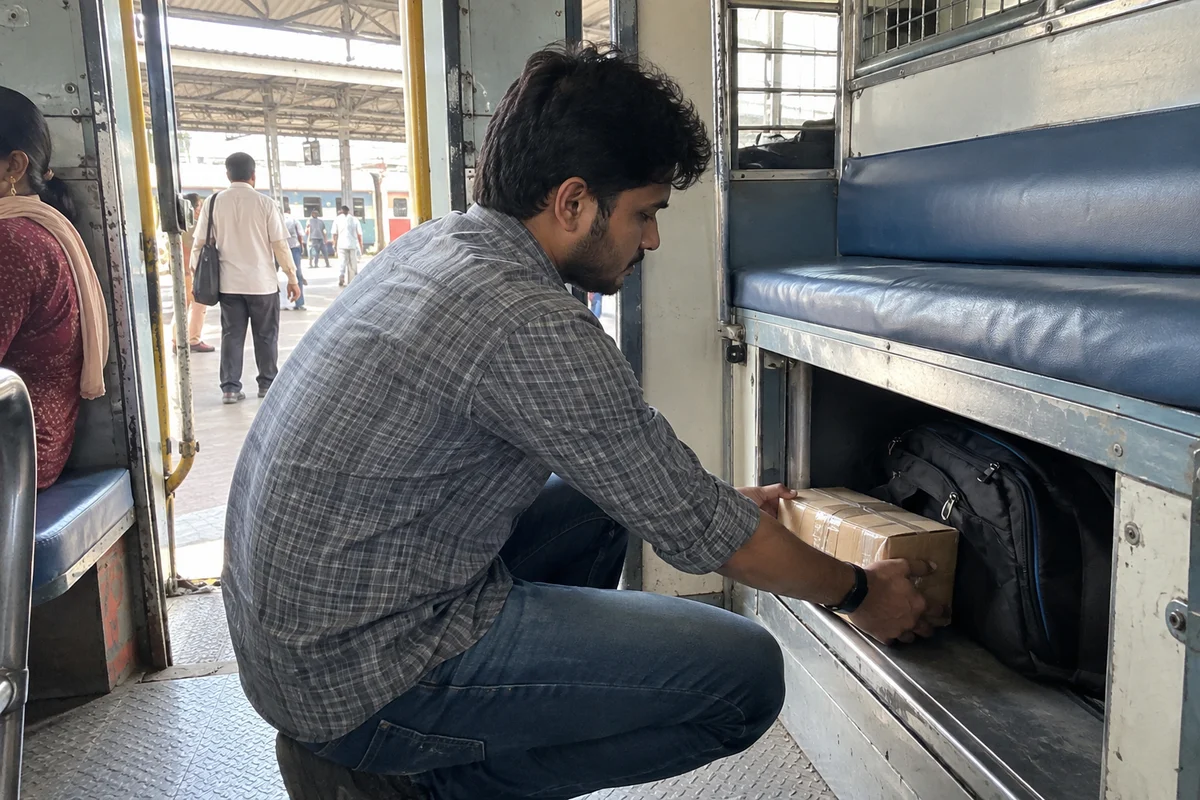
A parcel detour is worth considering only after you compare the journey you already planned with the journey that includes collection and handoff. Count only the added kilometres, then subtract the added fuel, tolls, parking and other agreed expenses from the proposed contribution. Check the added minutes separately. If a small route or timing change can erase the remaining amount, revise the handoff or decline the parcel before the trip starts.
A contribution of ₹350 can sound useful. Then the collection point adds 24 km, parking costs ₹40 and the sender needs another 20 minutes to finish packing. The parcel did not become dishonest. The trip simply became expensive.
This is the calculation I want travellers to do before saying yes. Not because every useful connection needs a spreadsheet. Because “I am already going that way” can hide a second journey inside the first one.
ShipdeHop Carry is for compatible, disclosed items on journeys a traveller already plans to make within India. The proposed contribution matters, but it is not the first number. The first number is the difference between your original route and the route you would take because of the parcel.
Start with the journey you were already making
Write down your original start, destination, distance and expected arrival time before adding the parcel. This is the baseline. Now add the exact collection point and exact recipient meeting point as stops. Compare the two routes using the same transport mode and a similar departure time.
Google Maps allows multiple destinations for driving and shows an estimated time for each route. It also lets you compare route choices and avoid tolls. That makes it useful for building the two versions of the trip. The estimate is still an estimate, so check actual signs, traffic rules and conditions on the day.
Do not charge the parcel for your whole Bengaluru to Mysuru journey if you were already making it. Do count the kilometres created by leaving your route to collect the parcel, returning to the route and completing the destination handoff. That difference is the parcel detour.
Calculate added kilometres, not convenient kilometres
Use one simple subtraction. Parcel route distance minus original route distance equals added kilometres. If your planned journey is 145 km and the route with collection and handoff is 169 km, the parcel adds 24 km. That is the distance you use for the extra fuel estimate.
For a car or motorcycle, divide the added kilometres by your real-world fuel efficiency, then multiply by the current fuel price you will actually pay. Use your vehicle’s recent result if you know it. A brochure number on a perfect test cycle is not your vehicle in city traffic with luggage.
Fuel prices and their components can change, and India’s Petroleum Planning and Analysis Cell publishes official petroleum price information. Check a current local price when you decide. An old rounded figure is fine for learning the formula, but not for pretending you know today’s cost.
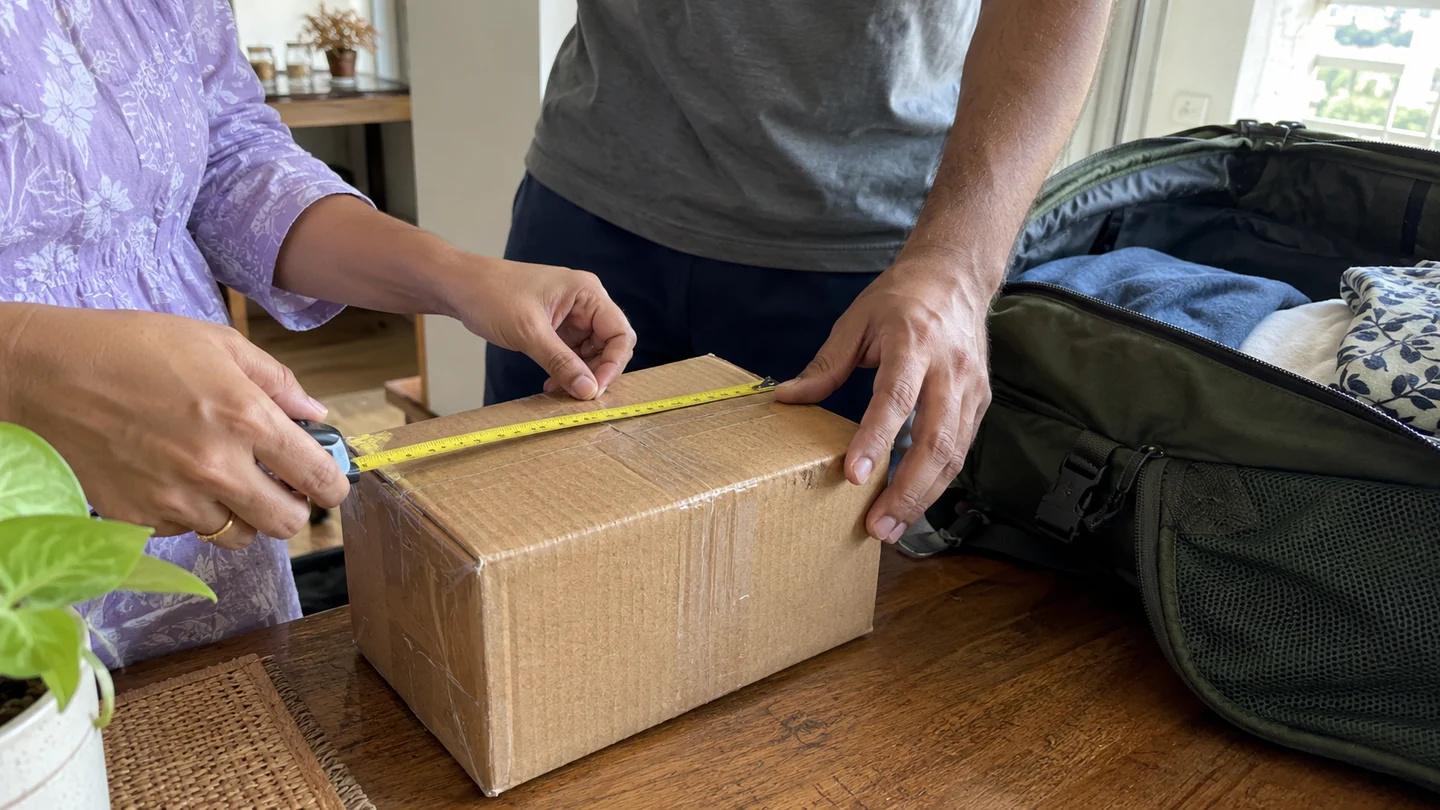
The finished parcel still needs to fit the luggage space you genuinely have. Use Carry to understand the disclosed-item and existing-journey model, then check the packed measurements rather than the product dimensions.
| Route line | Illustrative input | What it tells you |
|---|---|---|
| Original planned route | 145 km | Your trip without the parcel |
| Route with both handoffs | 169 km | Your trip if you accept |
| Added parcel distance | 24 km | The distance created by the task |
| Real fuel efficiency | 14 km/l | Use your own recent result |
Reference Google Maps Help, Get directions and show routes · Petroleum Planning and Analysis Cell, official petroleum price information
 ShipdeHop
Subtract the direct extras from the contribution
Now list every direct cost caused by accepting the parcel. Start with extra fuel. Add any toll that appears only because of the detour, parking at collection or handoff, and a packing expense only if you explicitly agreed to pay it. Do not quietly absorb a cost because it appeared after the chat became friendly.
Here is an illustrative calculation, not a price or earnings promise. A proposed contribution is ₹350. A 24 km detour at 14 km/l using an illustrative fuel input of ₹100/l adds about ₹171 in fuel. Parking adds ₹40. The remainder after those listed expenses is ₹139.
The formula is contribution minus added fuel minus added tolls minus parking minus other agreed extras. ShipdeHop’s commission is zero, but zero commission does not make a detour free. The vehicle, road and handoff still create real costs.
If a detour crosses a toll point that the original journey did not, include that amount. IHMCL explains that FASTag toll payments are deducted when the tag is read at a toll lane. Your statement or the official route information is a better input than guessing from memory.
| Illustrative line | Amount |
|---|---|
| Proposed contribution | ₹350 |
| Added fuel for 24 km | − ₹171 |
| Added parking | − ₹40 |
| Remaining before valuing time | ₹139 |
Reference Indian Highways Management Company Limited, FASTag FAQ
Find the break-even detour before the route changes
A useful boundary is the maximum added distance the contribution can cover before your listed direct costs consume it. First subtract fixed extras such as parking and parcel-only tolls from the contribution. Multiply what remains by your vehicle’s km/l, then divide by the fuel price per litre.
Using the same illustrative inputs, ₹350 minus ₹40 parking leaves ₹310. Multiply ₹310 by 14 km/l and divide by ₹100/l. The fuel-only break-even boundary is about 43 km of added driving. At 24 km, some amount remains. Near 43 km, the listed contribution has been consumed before giving any value to your time.
This boundary is not a target. It is the cliff edge. A trip that uses almost the full contribution on direct costs is fragile. One wrong location pin, one missed turn or one unavailable recipient can push it beyond the line.
Use the parcel calculator for your own inputs. Keep the contribution, added expenses and remainder visible. If your transport mode is not fuel-based, replace the fuel line with the actual added fare or ticket cost created by the handoff.
Keep waiting time separate from money
Do not hide 55 added minutes inside a ₹139 remainder. Write time on its own line. Count travel to the collection point, waiting for the parcel, checking the disclosed item, reaching the recipient and waiting for the handoff. The same 24 km can be easy on an open road and miserable across a crowded city at the wrong hour.
I would not prescribe one universal rupee value for everyone’s time. A student on a relaxed trip and a professional heading to a fixed appointment have different constraints. What matters is making the added minutes visible before you commit.
Use a personal limit. For example, you might decide that any collection adding more than 20 minutes, any destination handoff threatening your train or any uncertain recipient window needs a revised meeting point. That is a decision rule, not an earnings calculation.
Check current product availability before treating a route page or planning tool as a live booking. The website can help you think through the plan, while live matching, booking and payment depend on the current product status.
Reference Google Maps Help, Get directions and show routes
 ShipdeHop
Use a proceed, revise or decline decision
The answer does not need to be yes or no immediately. A poor detour can become a sensible arrangement when the sender meets near your original route, the recipient uses a reliable meeting point or the time window becomes precise.
Revise the plan when the parcel fits but the handoff does not. Decline when the direct extras consume the contribution, the timing threatens your own journey, the contents are unclear or the packed parcel does not fit safely. A larger contribution does not repair an undisclosed item.
The most useful negotiation is often geographic. Moving a pickup from a residential lane to a station entrance can remove kilometres, parking and uncertainty at once. Get the new pin, rerun both routes and confirm the changed plan with all three people.
| Decision | Use it when | Next action |
|---|---|---|
| Proceed | Detour, costs, parcel and both windows fit | Confirm one shared plan |
| Revise | The parcel fits but a handoff creates waste | Move the point or tighten the window |
| Decline | Costs consume the contribution or your trip is at risk | Protect the original journey |
| Pause | Contents, size, person or location has changed | Recheck before anyone travels |
Send one message that makes changes expensive to hide
Before accepting, send a compact summary: “My original route is A to B. Your collection pin and recipient pin add about 24 km and 55 minutes. We have agreed on the disclosed item, packed size, collection window, recipient window and ₹350 contribution. If either pin, parcel or window changes, I will recalculate before continuing.”
That sentence is deliberately plain. It gives the sender, traveller and recipient the same reference. It also makes a late change visible. Nobody has to remember which cheerful voice note contained the actual meeting point.
When a change happens, stop and compare the routes again. Do not let arrival pressure turn a revised task into automatic consent. The traveller can revise or decline. The sender can seek another connection. The goal is a useful journey, not a heroic rescue of a bad plan.
My rule is simple. Protect the journey you were already making. If the parcel still fits after distance, direct cost, time, contents and both people are clear, then the contribution can be evaluated honestly.
What remains after extra expenses?
Change the amounts to match your proposed arrangement. Include every relevant expense.
Questions, answered
How do I calculate whether a parcel detour is worth it?
Compare your original route with the route containing collection and recipient stops. Subtract the original distance from the parcel route distance. Calculate the cost of those added kilometres, then subtract added fuel, tolls, parking and other agreed expenses from the contribution. Review added minutes separately.
Should I count the cost of my whole journey?
Not if you were already making that journey. For this decision, isolate the costs created by accepting the parcel. Count the detour, parcel-only tolls, parking, waiting and any agreed extras. Your original trip remains the baseline.
What is the break-even detour distance?
It is the added distance at which the contribution is fully consumed by the listed direct costs. Subtract fixed extras from the contribution, multiply the remainder by your real km/l and divide by the current fuel price per litre. Treat the result as a boundary, not a target.
Does zero commission mean I keep the full contribution?
ShipdeHop’s commission is zero. Your own added travel, toll, parking or other agreed expense can still reduce what remains. Calculate the complete extra cost before deciding.
What if the sender changes the pickup point after I accept?
Pause and recalculate. Compare the new parcel route with your original route, update kilometres, time and direct costs, then confirm or decline the changed plan before travelling to the new point.
Sources and useful references
External source pages checked on 21 October 2026. The worked amounts are inputs for the decisions explained above.
- Google Maps Help, Get directions and show routesChecked 21 October 2026
- Petroleum Planning and Analysis Cell, official petroleum price informationChecked 21 October 2026
- Indian Highways Management Company Limited, FASTag FAQChecked 21 October 2026

I’m building ShipdeHop around useful connections between people, journeys and pre-loved things. Zero commission. Now and always.
Why I’m building ShipdeHop →