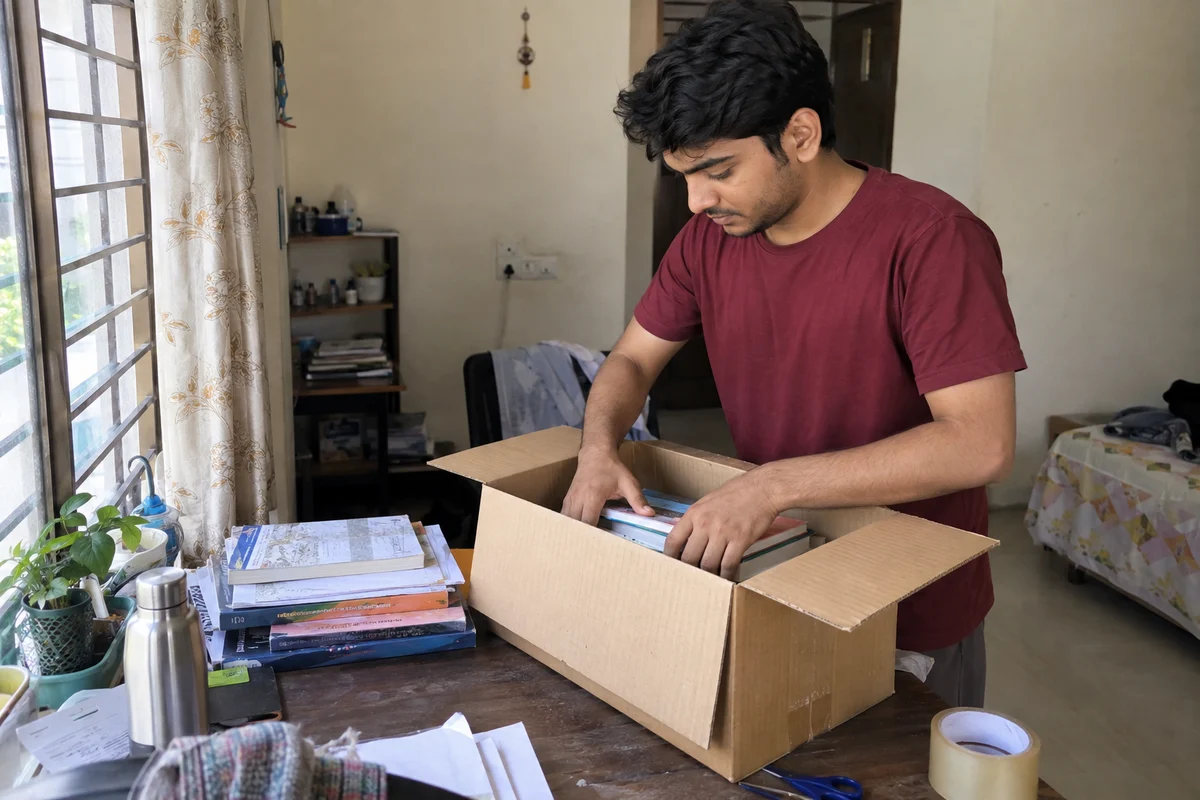
For a ShipdeHop parcel pool arrangement, the sender, traveller and recipient need to agree the same item, packed size, existing journey and two handoffs. Start with when the recipient can actually receive it, then work backwards. Proceed only when the parcel fits, both meeting windows work and nobody is relying on an unconfirmed person or a changed plan.
A friend is travelling to the right city. You have a parcel to send. That sounds like most of the work is done. Then the person receiving it says they will be home after seven. The traveller reaches at four. Suddenly, the smallest box has the biggest scheduling problem.
I would start with the person at the other end. Not because the sender or traveller matters less, but because a parcel without an agreed recipient has nowhere sensible to finish its journey.
This is my practical approach to planning a ShipdeHop ParcelPool exchange. Get three separate yeses to one written plan. A friendly yes from one person cannot quietly stand in for the other two.
Start at the receiving end
Ask the recipient for a place and a window they can actually commit to. Include the time they need to reach the meeting point. Being free at five is different from being able to meet at five if they still have a bus journey to make.
Then ask who will receive the parcel if that person cannot attend. An alternative recipient needs to be named and agreed in advance. Do not turn a neighbour, hostel receptionist or security guard into part of the arrangement by assumption.
Write down a waiting limit too. A traveller who agrees to a short handoff has not agreed to spend the evening looking after the parcel. If the receiving end is unresolved, keep the arrangement open rather than treating collection as the point of no return.
Give each person a decision they can own
I use the word ready carefully. Ready means the person has checked their part and can explain what happens next. It does not mean they saw a message, reacted with a thumbs-up or assumed somebody else had sorted it.
Use this table as a conversation guide. The responsibilities are a proposed planning method, not a claim that the app automatically assigns, monitors or guarantees each task.
| Person | Their explicit yes | Pause if |
|---|---|---|
| Sender | The disclosed item is packed, measured and ready at the agreed collection point and time. | The contents, packaging or pickup details are still changing. |
| Traveller | This exact parcel and both handoffs fit my existing trip, luggage and agreed waiting limits. | Acceptance needs an unplanned trip change or unchecked transport permission. |
| Recipient | I, or the agreed alternative, can receive this parcel at the stated place and time. | Nobody can commit to being there. |
Describe the parcel after packing it
The sender should describe the contents plainly, including quantity and anything relevant to handling. A bag of clothes and a box containing a camera are different requests, even if both are described as small. Make the relevant contents checks possible before acceptance.
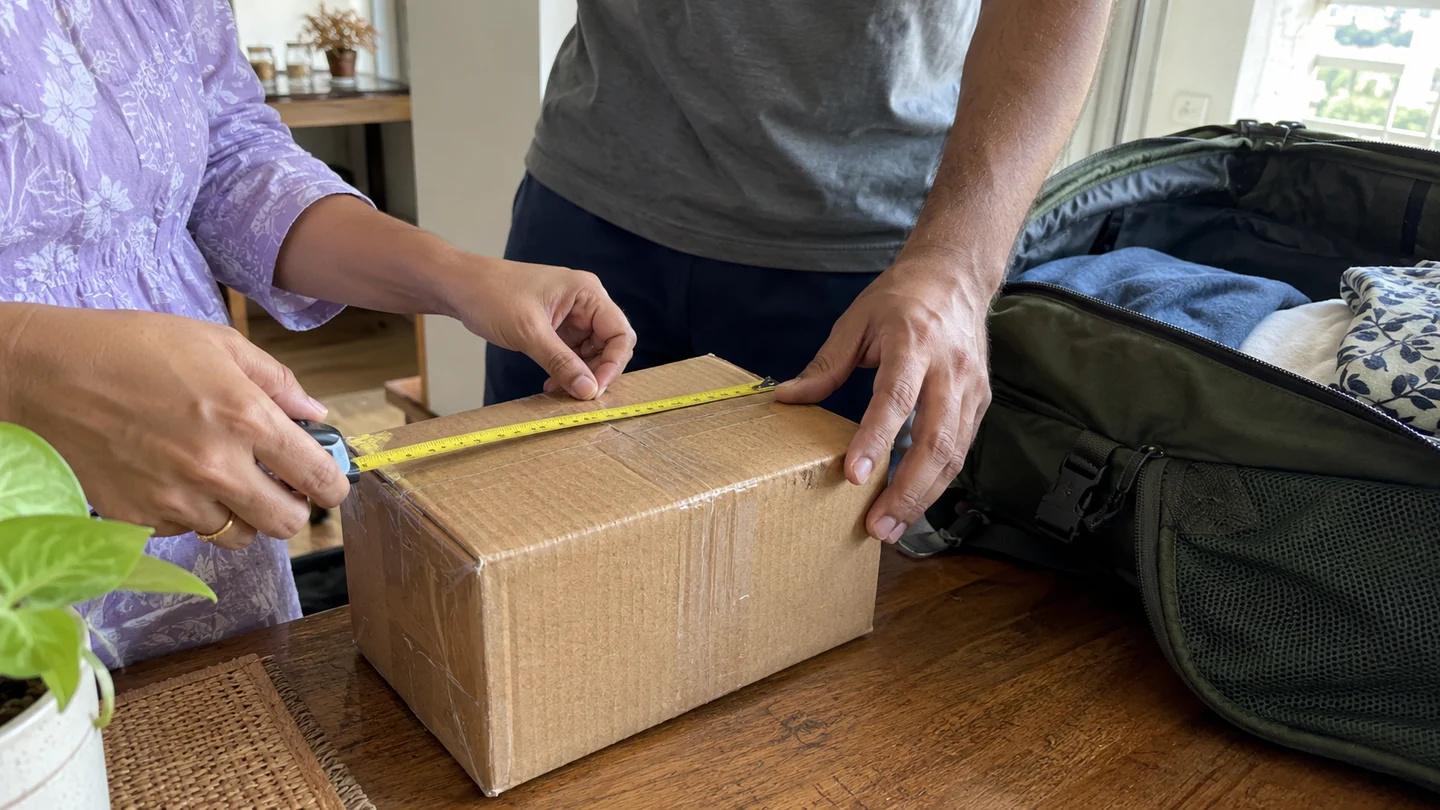
DHL Express India’s measurement guidance, dated 7 April 2026 and checked on 19 October, says to measure the closed, fully packed box on a flat surface using its exterior dimensions. That is useful measurement advice here. Its courier charging formulas are not a ShipdeHop capacity rule.
My practical addition is to put those finished measurements beside the item description in the same message. If you add padding, use another box or include one more item, update the measurements before seeking a new yes. The version the traveller accepted must describe what arrives at collection.
Reference DHL Express India guidance on measuring a closed, fully packed parcel, 7 April 2026
 ShipdeHop
Packing is a decision before collection
India Post’s current Parcel Retail page says parcels that do not meet its packing specifications will not be accepted for booking. That is a requirement for its own postal service. It is not permission to carry the same item by every other transport mode.
The broader lesson I take from that is about sequence. Check packing and suitability before moving the people. Avoid arranging a meeting and hoping that tape, padding or a different bag can solve whatever turns up.
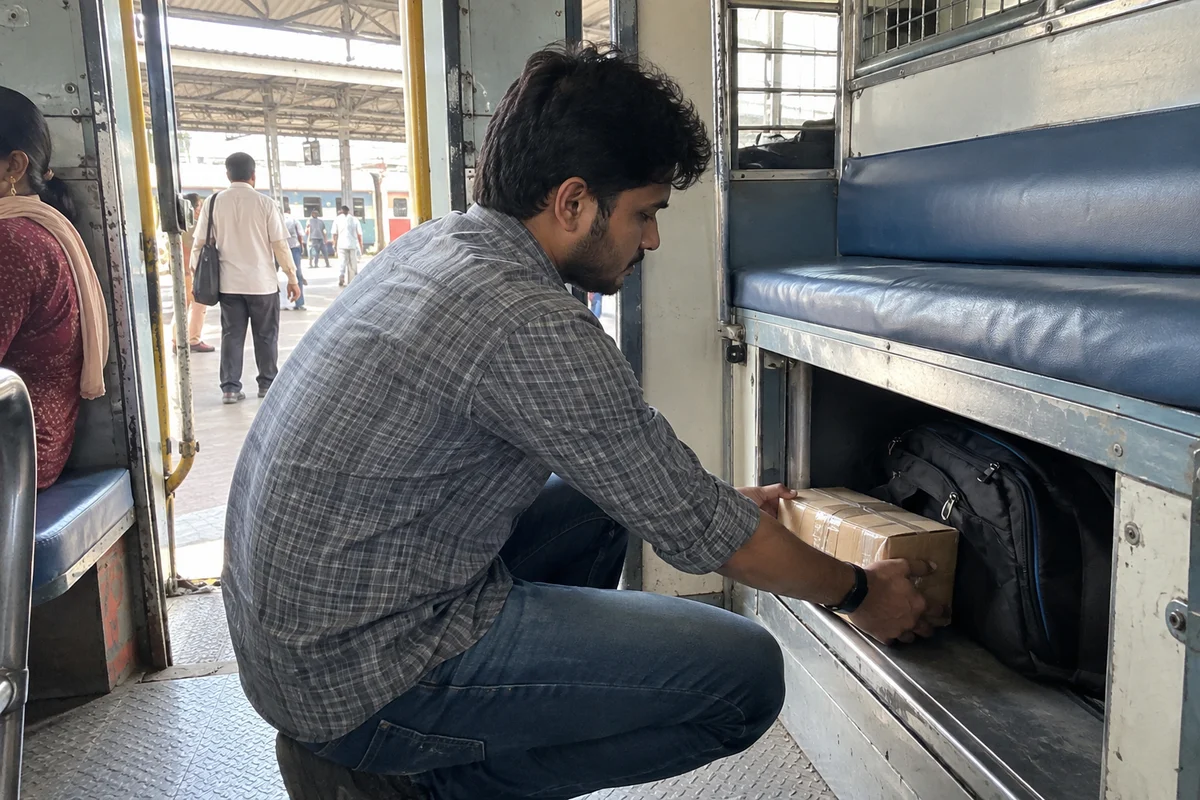
Use ShipdeHop’s prohibited-items guidance and check any restrictions that apply to the actual journey. Ask whether the package needs a particular orientation or protection from other luggage. If those needs cannot be met, choose another arrangement. A matching destination does not answer a handling question.
Reference India Post official Parcel Retail service page and packing acceptance requirements
Test the windows before anyone leaves
Consider a planning example for a Bengaluru to Mysuru journey. The traveller expects to reach the agreed meeting area between 16:00 and 16:30. The recipient is available from 17:00. The traveller can wait for ten minutes after arriving.
Those windows do not fit. Even arrival at the end of the expected range only takes the waiting limit to 16:40. There is still a gap before the recipient becomes available. This is a hypothetical timing example, not a published journey or an arrival estimate from ShipdeHop.
The useful options are to find an agreed recipient who can attend during the arrival window, identify a different compatible journey, or decline this arrangement. Do not quietly assume that the traveller will delay the rest of their day. If you change the recipient, get the sender and traveller to confirm that change before collection.
 ShipdeHop
Treat a changed plan as a new question
A useful agreement can become unsuitable without anybody behaving badly. The sender changes the pickup point. The traveller has less luggage space. The recipient gets called into work. The mistake is continuing as though the original yes still covers all of it.
Give the summary a simple version label, such as Plan B, and state exactly what changed. Ask the affected people to confirm again. A new parcel, recipient, location or material timing change needs more than a message saying it should be fine.
My rule is simple. If the change affects what someone carries, where they go, when they wait or who receives the item, reopen the decision. Silence is not agreement. Keep the latest accepted version together so nobody is travelling to a meeting point from yesterday’s conversation.
Copy this three-person readiness card
Put the following fields into one private planning message. Replace every bracket with a concrete answer. If a field is unknown, write unknown and resolve it rather than making the card look complete.
The final line should ask all three people to confirm the same version. For example, ask whether they accept Plan B as written, with no change to the item, recipient or two meeting windows. This is a planning summary, not a replacement for the app’s current requirements.
- Plan version and journey date [version] [date]. Keep the latest accepted version easy to identify.
- Item [plain contents and quantity]. Relevant condition and handling needs [details].
- Finished parcel [length × width × height in cm] and [packed weight in kg].
- Sender and collection [agreed person] [exact meeting point] [ready window] [waiting limit].
- Existing journey [origin and destination] [transport mode] [space and restrictions checked].
- Recipient and receipt [agreed person] [exact meeting point] [available window] [waiting limit].
- Change plan [who contacts whom] [agreed alternative recipient, if any] [when to pause instead].
- Contribution and extra expenses [agreed amounts in ₹, if applicable] [who covers each agreed expense]. Confirm the same version with sender, traveller and recipient.
Keep identity, acceptance and handoff separate
An identity check answers a different question from whether this parcel fits this journey. Neither should substitute for checking the item and receiving it at the agreed exchange. Follow the current app instructions for any verification or handoff step.
ShipdeHop’s published safety guidance says not to mark delivery before the exchange or leave the parcel with an unagreed person. It also says authentication codes belong in their intended secure flow. A planning message never needs somebody’s Aadhaar authentication OTP, account-access code or banking code.
At collection, review a material difference before accepting the parcel. At receipt, confirm the actual exchange rather than the expected arrival. If the arrangement changes in transit, use the agreed communication channel and pause to settle the next step. Do not invent an onward handoff to finish the conversation.
Reference ShipdeHop published guidance on identity, collection and recipient handoffs
Make the decision before making the detour
If the card is complete and all three people agree, you have a clearer basis for deciding whether to proceed. If one answer is missing, revise the plan. If the parcel, journey or receiving window cannot fit, decline this connection and look for another option.
Explore ParcelPool for the service and planning flow. The website’s current availability page separates personal planning from live listings, matching, bookings and payments, which are not connected on the website. Check the app’s actual options for a real arrangement. A route page is not evidence of an available traveller.
ShipdeHop takes zero commission, now and always. That does not remove the work of arranging a suitable exchange. If you want relevant launch updates, join the launch list with your own consent. My preference is a smaller number of clear agreements over a long chat full of assumptions. The parcel has to reach a person, not merely a city.
Reference ShipdeHop current product availability and website planning limitations
Use the savings and contribution calculators with your own costs.
Questions, answered
Who needs to agree to a ShipdeHop parcel arrangement?
The sender, traveller and recipient need to agree their own responsibilities within the same plan. If another person will receive the parcel, identify and agree that person before collection. One participant cannot confirm another person’s availability on their behalf.
What if the traveller arrives before the recipient is available?
Compare the expected arrival range with the recipient’s real availability and the agreed waiting limit. If there is no workable overlap, revise the recipient or find a different compatible journey before collection. Do not assume the traveller can wait indefinitely.
Do I need a new agreement if the box or recipient changes?
Yes. A different package can change capacity or handling needs, and a different recipient changes the handoff. Summarise the change in a new plan version and obtain fresh confirmation from the people affected before continuing.
Does completing the readiness card book a parcel on the website?
No. The card is a way to prepare and review the arrangement. Website planning does not create a live booking or a match. Check the app’s current availability, requirements and actual journey details before proceeding.
Sources and useful references
External source pages checked on 19 October 2026. The worked amounts are inputs for the decisions explained above.
- DHL Express India guidance on measuring a closed, fully packed parcel, 7 April 2026Checked 19 October 2026
- India Post official Parcel Retail service page and packing acceptance requirementsChecked 19 October 2026
- ShipdeHop published guidance on identity, collection and recipient handoffsChecked 19 October 2026
- ShipdeHop current product availability and website planning limitationsChecked 19 October 2026

I’m building ShipdeHop around useful connections between people, journeys and pre-loved things. Zero commission. Now and always.
Why I’m building ShipdeHop →