
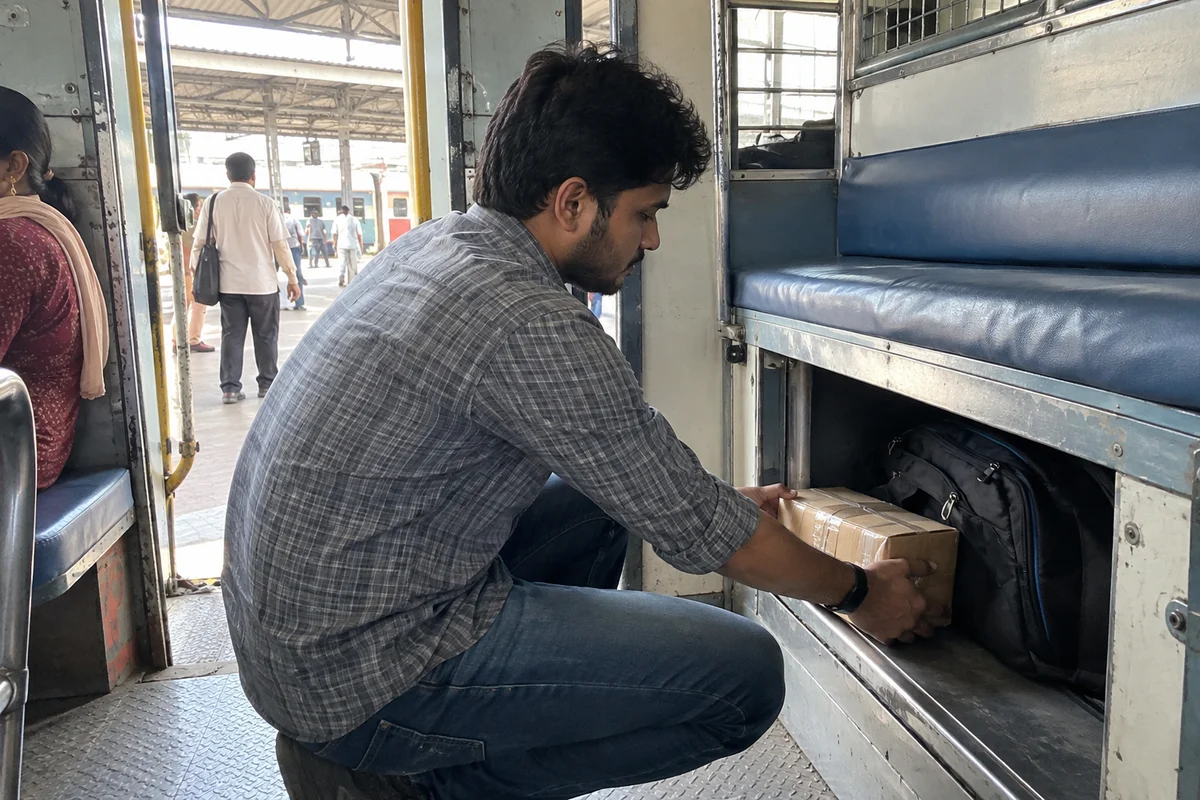
Before agreeing to carry a parcel on an existing journey, confirm the contents, the actual transport rules, the packed size and weight, both handoff windows, the people involved and the contribution after extra costs. A matching destination is the starting point. It does not settle whether the parcel fits your trip.
Extra income sounds wonderfully simple when the sentence ends at “you are already going that way”. Then someone adds a pickup across town, a box that is larger than expected and a recipient who will be available sometime after dinner.
That is the part I want people to calculate. An existing trip can create a useful connection. It should not quietly become a completely different trip that you agreed to before asking the ordinary questions.
I’m building ShipdeHop around people making useful connections through journeys, shared rides and pre-loved purchases. For Carry, my starting point is straightforward. Protect the journey you already planned. Accept a parcel because the full arrangement fits, not because a contribution looks attractive in a message.
What exactly am I being asked to carry?
Start with the contents, not the colour of the box. Ask for a plain description, quantity, condition, packed weight and anything that needs special handling. The sender should be able to explain what is inside and make the relevant checks possible before acceptance.
“Just a small parcel” is not enough information to decide. A stack of books, an electronic device and a leaking container raise different questions. Do not accept unknown contents or substitute a reassuring conversation for checking the actual item.
There is no universal permission slip for something simply because it belongs to another person. Check ShipdeHop’s exclusions and the actual operator’s current restrictions for your transport mode. Porter, for example, publishes its own prohibited-item list. That list belongs to its service and should not be treated as a rulebook for every bus, train or airline.
Reference Porter official FAQ on services, prohibited items and pricing factors
Does the packed parcel fit the space I really have?
Your luggage gets a vote. Ask for the finished outer measurements after padding and packaging, not the dimensions from a product listing. Then compare them with the space you can actually use without crushing the parcel, blocking access or displacing something you need for your own trip.
Weight matters, but shape matters too. A light long object can be awkward where a compact heavier box would fit. Confirm whether the parcel must remain upright and how it can be secured. If fitting it requires removing protective packaging, the arrangement needs another answer.
This is also why a casual comparison with a courier price can be misleading. DTDC says its pricing depends on weight, dimensions, distance and service type. A traveller’s available space is another real constraint, even when nobody is calculating a formal courier tariff.
Reference DTDC Personal Courier and the factors used to calculate its charges
Where and when do both handoffs actually happen?
Write down collection and receipt as two separate appointments. A sender who can meet at 8 am does not solve a recipient who is unavailable when you arrive. “Near the station” also needs a precise, mutually acceptable meeting point and a realistic time window.
Start from your existing itinerary. Add the time to reach the collection point, wait, check the parcel and continue your journey. Repeat the exercise at the destination. If either handoff threatens your own departure or leaves the parcel without an agreed recipient, pause before committing.
I prefer one slightly boring clear message to ten cheerful vague ones. Confirm who contacts whom, when the item will be ready and what happens if somebody misses the window. Agree those details before either person starts travelling to meet you.
Who is responsible for which part of the exchange?
The sender, traveller and recipient are doing different jobs. The sender prepares and describes the item. The traveller decides whether to accept the disclosed parcel and the agreed journey. The recipient needs to be ready to receive the correct item. Put the responsibilities into the conversation rather than leaving them to assumptions.
If the item was bought from a marketplace seller, separate product inspection from collection. Carrying a box does not automatically make you a camera technician, furniture restorer or authenticity expert. The buyer needs to define any expected check and decide whether you are able and willing to perform it.
Use the identity and handoff steps required by the current app flow. Keep authentication codes private. A parcel confirmation should correspond to the actual handoff it records. If the people, contents or plan change at collection, stop and resolve the change before continuing.
What does the contribution leave after extra costs?
Use the proposed amount, then subtract the expenses created by accepting the parcel. Count extra travel to collection, an agreed detour, parking if relevant and any packaging expense you have explicitly accepted. Your original trip and the extra task should remain visible as different lines.
Take a proposed contribution of ₹300. If extra pickup travel costs ₹70, a destination detour costs ₹50 and an agreed packing expense is ₹20, the amount remaining after those listed expenses is ₹160. That is arithmetic for this scenario, not an earnings rate or a promise about what a route will offer.
Now change one assumption. If collecting the parcel adds another ₹120 of travel expense, the remainder falls to ₹40. Your time and inconvenience may still make that a poor fit. Money left after listed expenses does not, by itself, mean the arrangement is worth accepting.
| Line in this scenario | Amount |
|---|---|
| Proposed traveller contribution | ₹300 |
| Extra travel to collection | − ₹70 |
| Destination detour | − ₹50 |
| Agreed packing expense | − ₹20 |
| Remaining after these expenses | ₹160 |
What would make me decline this parcel?
Decide your stop conditions before the attractive contribution starts negotiating on your behalf. A useful arrangement can survive a few practical questions. If basic details are missing, you do not need to solve the uncertainty by accepting it.
This is not about treating every sender as suspicious. It is about keeping a clear boundary around the task. You are entitled to say that the contents, space, timing or required responsibility do not fit the journey you planned.
A declined parcel can be the right outcome. The sender may need a different traveller, a courier with suitable handling or dedicated transport. Keeping an unsuitable item off your trip is better than creating a problem at the station or at the recipient’s doorstep.
- Decline unknown contents or an item that is prohibited for the proposed arrangement.
- Pause if the packed weight, dimensions or condition differ from what was agreed.
- Decline a pickup that jeopardises your existing departure.
- Pause if there is no available, agreed recipient at the other end.
- Decline a technical inspection or handling task you cannot reasonably perform.
- Recalculate and discuss any new detour or expense before accepting a changed plan.
Can all three people repeat the same plan?
Before saying yes, send one compact summary. Name the disclosed item, packed measurements, sender, recipient, collection point and window, receipt point and window, contribution and any agreed extra expenses. Include the inspection boundary and what happens if a handoff cannot be completed as planned.
Ask the sender and recipient to confirm the same details. This catches surprisingly ordinary mismatches. A sender can be discussing morning collection while the recipient has been told evening arrival. The trip can be perfectly real and still be the wrong connection.
That is the kind of ordinary clarity I want ShipdeHop to make easier. A parcel contribution should make sense after the questions, not only before them. If the contents, space, people, timing and numbers fit, you have a much better basis for deciding whether to carry it.
What remains after extra expenses?
Change the amounts to match your proposed arrangement. Include every relevant expense.
Questions, answered
Can I carry a parcel just because I am travelling to the same city?
A matching city does not establish suitability. Check the item, packed size and weight, transport restrictions, collection point, recipient availability and extra effort. The full arrangement needs to fit the journey you already planned.
How should I calculate the amount I could keep?
Start with the proposed traveller contribution and subtract the additional expenses you have agreed to cover. Include pickup travel, detours and any relevant packing or parking costs. Consider your time separately. The result is an estimate for your own inputs, not an earnings promise.
Am I expected to inspect a marketplace purchase when collecting it?
Only agree to checks that have been clearly requested and that you can reasonably perform. Carrying an item does not automatically include technical testing, authentication or a warranty. The buyer and seller should settle the inspection responsibility before collection.
Does zero commission mean the parcel journey has no cost?
No. ShipdeHop’s commission is zero. An agreed traveller contribution, collection expense, packaging or detour may still be part of the arrangement. Compare the complete cost and responsibility before choosing a suitable option.
Sources and useful references
External source pages checked on 18 October 2026. The worked amounts are inputs for the decisions explained above.
- Porter official FAQ on services, prohibited items and pricing factorsChecked 18 October 2026
- DTDC Personal Courier and the factors used to calculate its chargesChecked 18 October 2026

I’m building ShipdeHop around useful connections between people, journeys and pre-loved things. Zero commission. Now and always.
Why I’m building ShipdeHop →