
Parcel pooling can be faster than a conventional courier only when one real traveller’s existing journey aligns with the parcel-ready time, collection window, route and recipient availability. A courier follows its own booking, processing, network and delivery schedule. Do not compare a traveller’s arrival time with a courier’s posted average alone. Compare the complete clock from when the parcel is ready to when the correct recipient can actually receive it.
“The traveller reaches Mysuru at 1 pm” is not the same as “the parcel is delivered at 1 pm”.
The parcel still has to be packed, collected, accepted, carried and handed to the correct person. If the sender finishes packing after the traveller leaves, the arrival time is irrelevant. If the recipient is free only in the morning, a fast journey can still produce an evening problem.
That is the real parcel pooling versus courier timing decision. Do not compare one attractive arrival time with a courier’s broad estimate. Put both options on a complete clock, from parcel-ready to actual receipt.
Compare two different timing systems
A courier moves the parcel through a dedicated service network. The timing can include booking acceptance, collection or counter drop, processing, transport, destination handling and delivery. The customer follows the operator’s serviceability, cutoffs and tracking events.
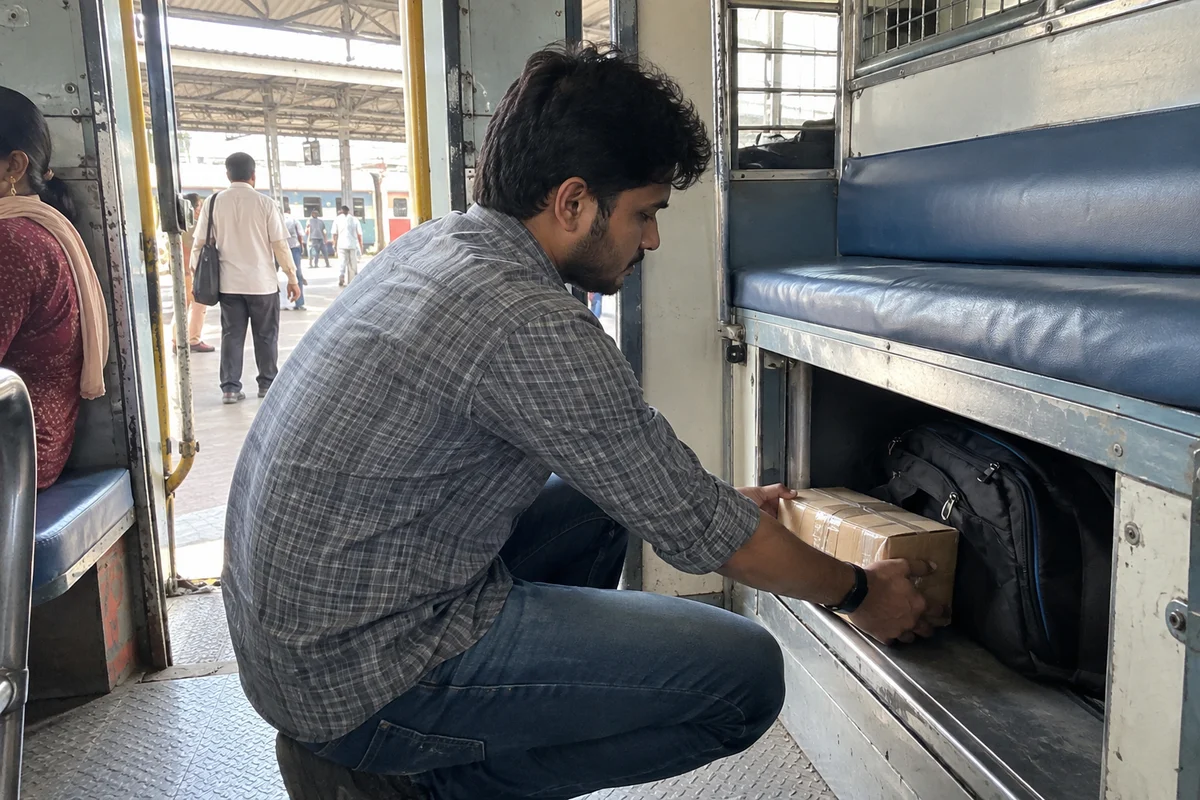
Parcel pooling uses a willing traveller’s existing journey. It removes some network stages, but adds strict human dependencies. The parcel must be ready before departure, the pickup must fit the traveller’s route and the recipient must be available after arrival.
India Post publishes booking-to-delivery service standards for domestic Speed Post Parcel, including average ranges by route category. It also provides online track and trace and delivery information by SMS. Those are features of its service. They do not become a promise for every individual article, and they are not a timing model for a traveller-carried parcel.
A ParcelPool plan is different. It can be attractive when the route already exists and all handoffs align. It is unsuitable when the sender needs a collection after the traveller departs or the recipient cannot receive the item.
| Timing question | Parcel pooling | Courier |
|---|---|---|
| What starts the clock | Parcel ready plus compatible traveller | Accepted booking or drop-off |
| Main dependency | Three people and one existing journey | Service network and route |
| Progress evidence | Agreed handoffs and journey updates | Operator tracking events |
| Delivery moment | Actual recipient handoff | Completed carrier delivery process |
Reference India Post, Speed Post Parcel Domestic service standards and tracking features
Use four clocks, not one arrival estimate
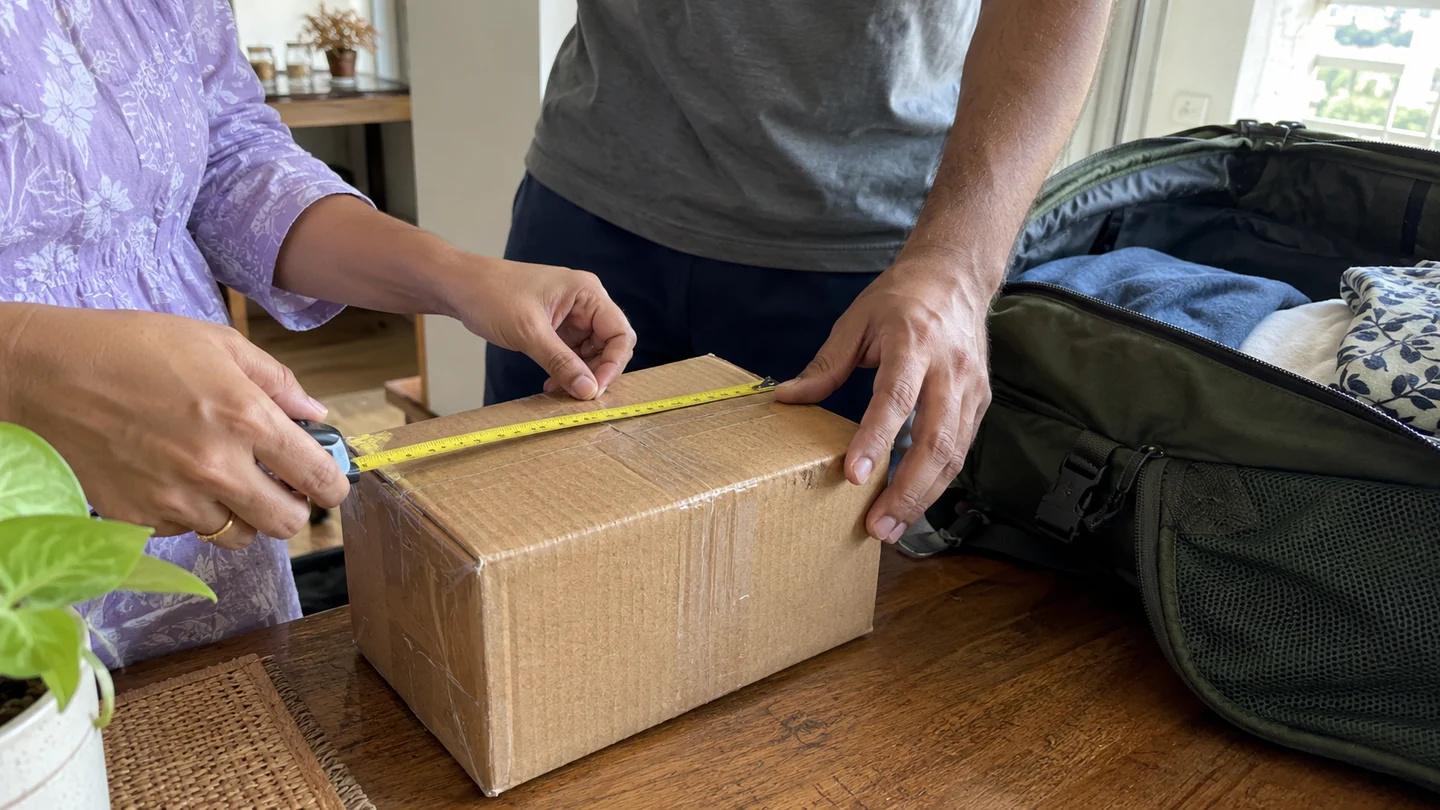
The first clock is parcel readiness. Include packing, labelling, measurement and any disclosure or inspection needed before the traveller accepts it. “Ready around 8” is weaker than “sealed, measured and available from 7:40 to 8:10”.
The next clock is the traveller’s collection and departure window. Work backwards from departure. Subtract the time required to reach the pickup point, check the disclosed parcel and return to the planned route. A traveller leaving at 9:00 cannot collect at 8:55 unless the meeting point is already inside the journey and the handoff truly takes five minutes.
The next clock is the journey. Google Maps displays estimated travel time for routes and lets a user set departure or arrival times. Treat that estimate as planning evidence, not a guarantee. Actual traffic, stops and the traveller’s transport schedule still matter.
The final clock is recipient availability. Write an opening and closing time, exact meeting point and fallback. “Call when nearby” is not a window. It is a future negotiation wearing comfortable clothes.
Use the ParcelPool planner to write the Indian origin, destination, journey date, preferred IST window, disclosed contents, packed size and collection details before comparing the four clocks.
Reference Google Maps Help, Get directions and show routes
 ShipdeHop
Calculate the latest safe collection time
Use a simple rule. Latest safe collection equals traveller departure minus route-to-departure time minus parcel-check time minus a disruption buffer. This is not the latest imaginable handoff. It is the latest one that still protects the journey.
Take an illustrative traveller departing at 9:00. Reaching the departure point from collection takes 20 minutes. The parcel check needs 10 minutes. The agreed disruption buffer is 15 minutes. The latest safe collection time is 8:15.
Now compare the sender’s promise. If the parcel is available from 7:45, the collection has room. If it will be ready at 8:35, the plan fails before anyone discusses destination arrival. Moving the pickup point closer may repair it. Hoping traffic will be kind does not.
Add one change rule. If the item, packed dimensions, collection point or readiness time changes, recalculate before the traveller moves toward the pickup.
| Illustrative line | Time | Meaning |
|---|---|---|
| Traveller departure | 09:00 | Fixed journey constraint |
| Collection to departure point | 20 min | Travel created by handoff |
| Parcel check | 10 min | Contents and package check |
| Disruption buffer | 15 min | Protects the original trip |
| Latest safe collection | 08:15 | Collection must finish by this time |
Build the destination handoff backwards too
Start with the estimated arrival, then add the time required to reach the recipient point and the agreed arrival buffer. The recipient window must remain open after that total, not merely after the bus, train or car reaches the city.
Suppose the traveller expects to reach the destination at 12:45. Reaching the meeting point takes 15 minutes and the buffer is 20 minutes. The working handoff time becomes 13:20. A recipient available until 13:00 does not fit. A recipient available from 13:30 to 15:00 may fit, subject to the actual journey.
The recipient also needs a fallback instruction. Decide whether the traveller waits for a limited period, meets another named person, carries the parcel onward or stops the arrangement before departure. Do not invent a doorstep drop after the parcel is already in motion.
The same-day parcel timing tool can help put your own readiness, departure, travel duration, buffer and recipient cutoff on one screen. It is a planner, not a live match or arrival guarantee.
| Destination line | Illustrative time | Fit check |
|---|---|---|
| Estimated city arrival | 12:45 | Journey estimate only |
| Travel to meeting point | 15 min | Adds to handoff clock |
| Arrival buffer | 20 min | Allows ordinary variation |
| Working handoff time | 13:20 | Recipient window must cover this |
| Recipient available | 13:30–15:00 | Potential fit, not a guarantee |
Compare the complete clocks side by side
For the courier option, record when the parcel can be booked, the serviceable origin and destination, the operator’s stated standard, the tracking method and the recipient arrangement. For parcel pooling, record the parcel-ready time, latest safe collection, traveller departure, estimated arrival, destination handoff and fallback.
India Post’s current domestic Speed Post Parcel page lists average booking-to-delivery service standards of one to two days for local parcels, one to three days for metro-to-metro, one to four days for state-capital routes and same-state parcels, and four to five days for the rest of the country. Branch-office delivery adds an additional day. These are published averages for that service, not a universal courier benchmark.
A compatible traveller may complete a handoff within the same day because the person is already travelling. That possibility depends on an actual accepted journey and all four clocks. ShipdeHop does not promise a traveller, departure or same-day arrival merely because a route page exists.
The useful comparison is not “same day versus four days”. It is “this confirmed end-to-end plan versus this available courier service”. If either option lacks a valid starting point, it is not yet an option.
| Decision line | Traveller-carried parcel | Courier parcel |
|---|---|---|
| Parcel ready | Exact time before departure | Before booking or collection cutoff |
| Transport timing | Specific existing journey | Operator service standard |
| Visibility | Agreed human updates and handoffs | Tracking events where provided |
| Recipient fit | Named window after arrival | Delivery arrangement and attempts |
| Best use | Compatible disclosed parcel and aligned people | Dedicated network and operator process |
Reference India Post, Speed Post Parcel Domestic service standards and tracking features
 ShipdeHop
Know which mismatch kills the plan
The first fatal mismatch is late readiness. If packing or disclosure finishes after the latest safe collection, the traveller option is gone unless the journey changes voluntarily.
The next mismatch is a pickup that threatens the original departure. A contribution does not turn a traveller into an on-demand vehicle. Protect the journey that already exists.
The next mismatch is an unavailable recipient. Arrival in the city is not delivery. A parcel that reaches Bengaluru at 6 pm while the recipient is available only until 5 pm needs a different handoff or a different plan.
The final mismatch is uncertain service scope. Check the current product availability before treating any website route or city page as proof of a live traveller, listing or booking. Website planning tools help structure the decision but do not create the connection.
- Stop if the parcel is not ready by the latest safe collection time.
- Revise if pickup travel threatens the traveller’s original departure.
- Stop if the recipient window closes before the buffered handoff time.
- Reconfirm whenever the parcel, person, point or time changes.
- Choose a courier or another arrangement when no compatible journey exists.
Send one timing card to all three people
Use one compact message: “Parcel is packed and available from [time]. Traveller collection must finish by [time] for a [departure time] journey. Estimated destination arrival is [time], followed by [minutes] to the handoff point and [minutes] buffer. Recipient is available from [time] to [time].”
Continue with the fallback: “If collection misses the cutoff, the parcel does not travel on this journey. If destination arrival moves outside the recipient window, we will use [agreed action]. Any change to the item, point, person or time needs confirmation before continuing.”
Ask the sender, traveller and recipient to confirm the same card. The earlier three-person readiness article checks whether everyone is prepared. This timing card does a narrower job. It proves whether the clocks can coexist.
That is the honest way to compare parcel pooling and courier timing. A traveller can remove days of network movement only when readiness and handoffs fit the journey. Speed without compatibility is just a parcel waiting in a different place.
Use the savings and contribution calculators with your own costs.
Questions, answered
Is parcel pooling always faster than a courier?
No. It can be faster when a real traveller’s existing journey aligns with parcel readiness, collection and recipient availability. Without that complete match, a courier or another dedicated option may be more suitable.
When does the parcel pooling clock start?
Start when the parcel is fully packed, disclosed, measured and available for collection. A traveller’s departure time does not help if the item is not ready before the latest safe collection cutoff.
How do I calculate the latest safe pickup time?
Subtract travel from collection to the traveller’s departure point, parcel-check time and an agreed disruption buffer from the fixed departure time. Collection should finish by the result.
Does a route estimate guarantee the handoff time?
No. A map or timetable estimate helps planning. Add collection, destination travel and buffers, then confirm the actual journey and recipient window. ShipdeHop’s website does not guarantee arrival.
What if the recipient becomes unavailable?
Follow the fallback agreed before departure. That may mean a limited wait, another named recipient, carrying the parcel onward or not sending it on that journey. Do not improvise an unattended or unapproved handoff.
Sources and useful references
External source pages checked on 23 October 2026. The worked amounts are inputs for the decisions explained above.
- India Post, Speed Post Parcel Domestic service standards and tracking featuresChecked 23 October 2026
- Google Maps Help, Get directions and show routesChecked 23 October 2026

I’m building ShipdeHop around useful connections between people, journeys and pre-loved things. Zero commission. Now and always.
Why I’m building ShipdeHop →