
You can explore earning money while travelling in India by carrying a suitable, disclosed parcel on a journey you already planned. Treat it as a possible contribution, not a salary or a free holiday. Check transport permission, spare space, both handoffs and extra effort before accepting. A compatible request and agreed terms still have to exist.
You are going home for the weekend. Or visiting friends in another city. Your ticket is booked, your own bag is nearly ready, and there is some room left. It is reasonable to wonder whether that space could help someone and bring in a contribution.
That is a much more useful starting point than another list promising ten ways to get paid to travel. Most people are not trying to become travel influencers between lectures. They want an option that fits the journey they already have.
I am building ShipdeHop around that connection. The important word is fits. If earning requires abandoning your plans, buying another ticket or spending the day collecting parcels, you are making a different decision. Here is how I would separate the possibilities before expecting money from any of them.
Choose the earning model before choosing an app
Travel-related income is not one category. Creating travel content is an audience-building business. Delivery work is organised around completing tasks. Carrying a parcel on an existing journey starts with spare capacity. Mixing these models produces very impressive headlines and fairly useless advice.
Two current official sources make the distinction concrete. Raahi’s how-it-works page, dated 11 July 2026 and checked on 31 October, describes travellers posting an existing trip and considering declared parcels. Swiggy’s developer-authored Delivery Partner listing, updated 27 October 2026, describes onboarding and earning through completed orders with chosen working hours. These are company descriptions, not my service tests.
ShipdeHop’s Carry page starts from a journey the traveller already intends to make. The table compares the stated task, not earnings, service quality or which platform will produce a match. Check each provider’s current terms before deciding.
| Option and official source | What you start with | What the money depends on | Best first question |
|---|---|---|---|
| Raahi traveller flow | A planned intercity journey and spare space | Accepting a suitable declared parcel under its terms | Does the parcel fit my existing itinerary? |
| Swiggy Delivery Partner flow | Partner onboarding and time allocated to delivery work | Completed orders and applicable conditions | Do I want to spend these hours doing delivery tasks? |
| ShipdeHop Carry | A journey already intended and space you can offer | A suitable arrangement and agreed traveller contribution | Can I carry this without rebuilding my trip? |
Reference Raahi official traveller flow, page updated 11 July 2026 · Swiggy developer-authored Delivery Partner listing, updated 27 October 2026 · ShipdeHop Carry: existing journeys, capacity and current app availability
An existing trip is an opportunity, not an income plan
Use one simple test. Would you still make this journey if nobody wanted to send a parcel? If yes, spare space may be useful. If no, do not describe the whole trip as money you were spending anyway. Its ticket, fuel, accommodation and time now belong in the decision.
A student returning from Bengaluru to their home city might have a confirmed departure but little flexibility before it. A frequent traveller might have more predictable dates but a completely full bag. Frequency and suitability are different things. Neither means requests will be waiting.
I would not plan rent, tuition or a trip budget around unconfirmed parcel income. A sender must need the right route at the right time, the item must be suitable, and the recipient must be available. When there is no compatible request, the sensible outcome is taking your original trip without one.
The earn-money page is the next step if that occasional contribution is what you want. If you need dependable scheduled income, investigate work designed around that requirement instead of turning a possible travel match into a monthly forecast.
The trip-first filter: which opportunity should you pursue?
Before discussing an amount, put yourself in the right row. These are decision rules, not promises that an item or transport mode is permitted. They deliberately give you a way to decline an attractive-looking request.
Read the prohibited-items rules before considering contents. Unknown sealed mystery parcels are not an earning opportunity to investigate by carrying them. Even a familiar item needs the actual transport operator’s permission where applicable. A platform category is not approval from a bus company, railway or airline.
Protect your own luggage first. A parcel should not displace medication, work equipment or something you need for the journey. Inspecting a disclosed item also does not make you its technical expert. Do not quietly accept testing or authenticity responsibilities that were never part of the task.
| Your situation | Decision now | Why |
|---|---|---|
| Trip confirmed, usable space, flexible handoff windows | Explore a compatible parcel, subject to all checks | The extra task may fit around the original journey |
| Departure uncertain or likely to change | Wait before making a firm offer | Another person should not rely on an itinerary you cannot confirm |
| Bag full or parcel cannot be secured | Decline this parcel | A higher contribution does not create safe usable space |
| Contents undisclosed or excluded | Decline | Money is not a reason to accept an unsuitable item |
| Transport permission unclear | Resolve it before acceptance | A matching destination does not establish permission |
| You need predictable daily earnings | Compare structured work opportunities separately | Occasional trip matching is not a salary |
Reference ShipdeHop prohibited items and operator-restriction boundaries
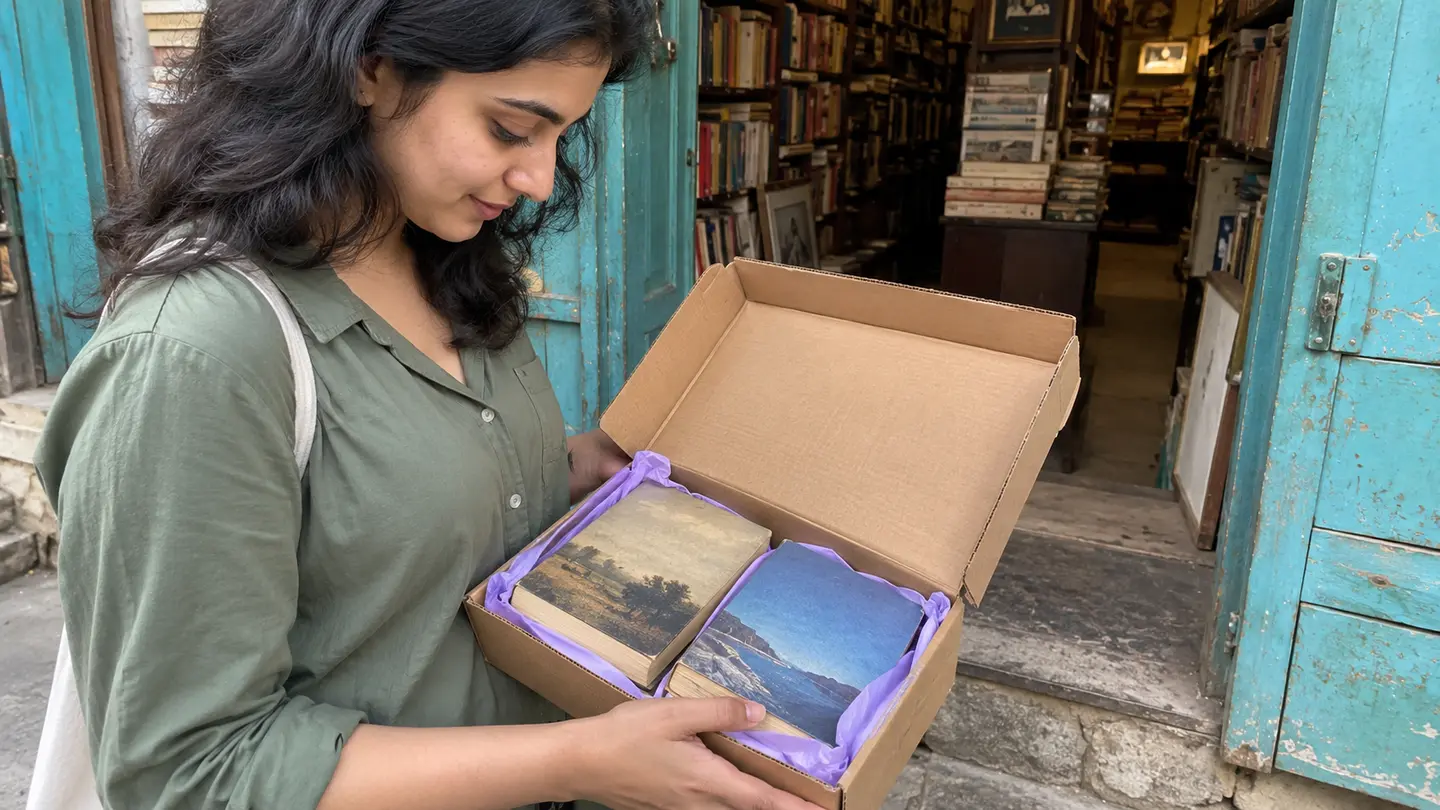
Make your route useful without promising the impossible
A vague offer such as “Bangalore to Mysore this weekend” leaves almost every useful detail unanswered. A better offer explains the part of the journey you can genuinely accommodate. You do not need a motivational caption. You need an itinerary another person can evaluate.
Start with the neighbourhoods or practical meeting areas you can reach. State your confirmed travel date and mode, then the collection window that leaves enough margin for your departure. At the other end, state when you can actually hand over a parcel rather than treating your arrival time as somebody else’s availability.
Describe available capacity after packing your own things. Ask the sender for the finished outer dimensions in cm and weight in kg. Do not advertise the empty bag’s full capacity when most of it is already committed. Mention any limits on shape, handling and accessibility.
Use this short offer brief. Replace every bracket with a confirmed detail before relying on it. It is a conversation aid, not a booking or proof that a route is available.
- Existing journey: [origin area] to [destination area], [date], [transport mode].
- Collection I can accommodate: [specific meeting area] during [window], without moving my departure.
- Receipt I can accommodate: [specific destination meeting area] during [window], with a confirmed recipient.
- Spare capacity: [usable dimensions and weight], after my own luggage and operator restrictions.
- Item details needed: [contents, packed size, weight, condition and handling requirements].
- Agreement needed: [contribution, extra expenses, responsibilities and the plan if either handoff changes].
Decide what the contribution is worth to you
Once an arrangement passes the fit checks, look at the proposed contribution. Subtract the additional expenses caused by accepting this particular parcel. Extra travel to collection, destination detours, parking or packaging you agreed to provide belong here. Do not invent an average earning rate and build your plans around it.
The basic calculation is agreed contribution minus additional accepted expenses. The remainder is not automatically profit after every obligation, and it does not put a value on your time. Consider waiting, carrying responsibility and the chance of disrupting your own plans alongside the number.
Use the traveller contribution calculator with your own inputs if an actual proposal reaches this stage. The calculator helps examine an offer. It cannot tell you that somebody needs your route, predict your monthly earnings or decide whether a restricted item is allowed.
ShipdeHop takes zero commission, now and always. That is a statement about ShipdeHop’s commission, not a promise that collection, travel or handling has no expense. I would rather somebody decline a poor fit than accept it because a headline made the earning look automatic.
Reference ShipdeHop Carry: existing journeys, capacity and current app availability
A changed parcel needs a changed decision
You agreed to a small book parcel. At collection, the box is larger, the contents are different or the recipient has changed. That is not a minor detail to sort out after departure. Stop and reassess before accepting the item. The earlier agreement was for a different task.
The same applies to timing. If a sender is late, your confirmed journey does not have to become a rescue operation. Agree a cutoff in advance and discuss what happens when collection or receipt cannot proceed. Never leave a parcel somewhere without an agreed, appropriate recipient arrangement.
Read the safety guidance and the current app terms before proceeding. Aadhaar identity verification is an identity check, not proof of good behaviour, product condition or a promise that a parcel will arrive. Do not disclose login or payment authentication codes to complete a supposed earning opportunity.
ShipdeHop’s website currently provides planning tools rather than guaranteed matches. Its safety page does not promise insurance, escrow or payment protection, and production website payments are disabled. Do not transfer another provider’s wallet, payout or protection claims to ShipdeHop.
Reference ShipdeHop safety, verification limits and current website payment status
Start with one real journey, not a monthly earnings target
For your next confirmed trip, do three things. Pack your own luggage, identify the collection and receipt windows you can genuinely offer, and decide which disclosed items you would be comfortable reviewing. That gives you something specific to explore without creating work you never wanted.
Then open Carry and review the current flow. As checked on 31 October 2026, the iPhone app is available and Android is coming soon. Plans made on the website remain local planning tools. Entering a route does not mean a parcel has been accepted or a match has been secured.
If you want launch or beta updates, use the website’s explicit-consent signup rather than assuming that making a local plan subscribes you. Only share the information the current flow actually needs. These options concern domestic journeys in India, not cross-border parcel carrying.
The point is not to make every trip productive. Sometimes you should just visit your friends. But when suitable spare space, clear responsibilities and two workable handoffs line up, you have a sensible basis for exploring a contribution on a journey you wanted to make anyway.
Reference ShipdeHop Carry: existing journeys, capacity and current app availability
What remains after extra expenses?
Change the amounts to match your proposed arrangement. Include every relevant expense.
Questions, answered
Can students earn money while travelling in India?
A student can explore carrying a suitable parcel on an already planned domestic trip, subject to current eligibility, item restrictions and transport permission. There must still be a compatible request and an agreement. Do not assume guaranteed demand or budget essential expenses around unconfirmed contributions.
How much can I earn by carrying parcels while travelling?
There is no verified universal amount in this guide. It depends on an actual suitable arrangement and agreed terms. Subtract additional accepted expenses from the contribution and consider your time separately. An occasional trip does not justify a daily or monthly income forecast.
Is carrying a parcel on my trip the same as a delivery job?
No. An existing-trip arrangement starts with a journey you intended to make anyway. Order-based delivery work is organised around completing delivery tasks during time you allocate to that work. Compare the responsibilities, onboarding and current terms rather than treating the models as interchangeable.
Can I take any small parcel on a bus, train or flight?
No. Size alone does not establish permission. Check disclosed contents, ShipdeHop’s exclusions and the current rules of the actual operator. Resolve uncertainty before accepting. Do not carry prohibited items or unknown sealed mystery parcels.
Can I use ShipdeHop for an international parcel while visiting India?
This guide concerns domestic journeys within India. It does not establish cross-border service, customs eligibility or permission to carry someone else’s goods internationally. Plan any India-only journey separately and check the current service scope.
Sources and useful references
External source pages checked on 31 October 2026. The worked amounts are inputs for the decisions explained above.
- Raahi official traveller flow, page updated 11 July 2026Checked 31 October 2026
- Swiggy developer-authored Delivery Partner listing, updated 27 October 2026Checked 31 October 2026
- ShipdeHop Carry: existing journeys, capacity and current app availabilityChecked 31 October 2026
- ShipdeHop prohibited items and operator-restriction boundariesChecked 31 October 2026
- ShipdeHop safety, verification limits and current website payment statusChecked 31 October 2026

I’m building ShipdeHop around useful connections between people, journeys and pre-loved things. Zero commission. Now and always.
Why I’m building ShipdeHop →