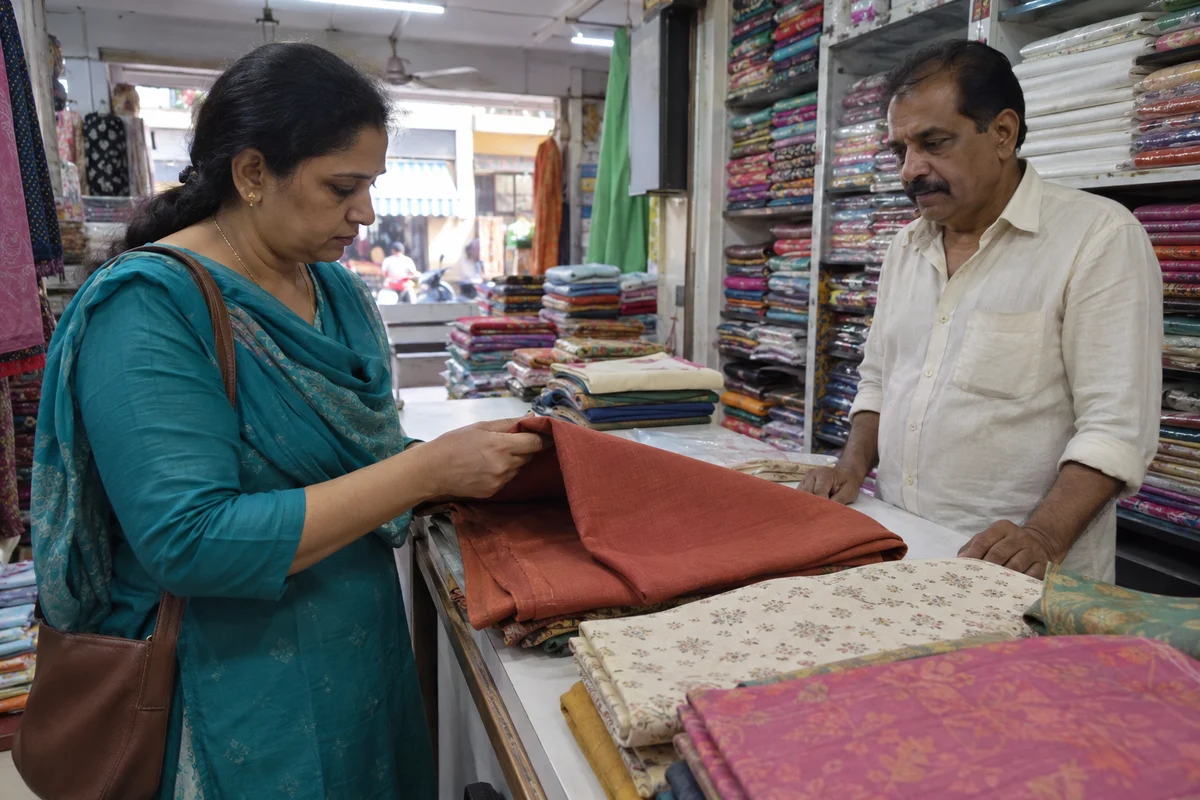
Before asking someone to buy an item in another city, specify the exact product identifier, variant, quantity, condition, spending ceiling, acceptable substitutions, checks at collection, receipt requirements and what to do if anything changes. A screenshot shows what caught your attention. It does not tell the traveller which difference is harmless and which difference makes the purchase wrong.
“Please get this one” is not a purchase brief. It is a sentence waiting to become an argument.
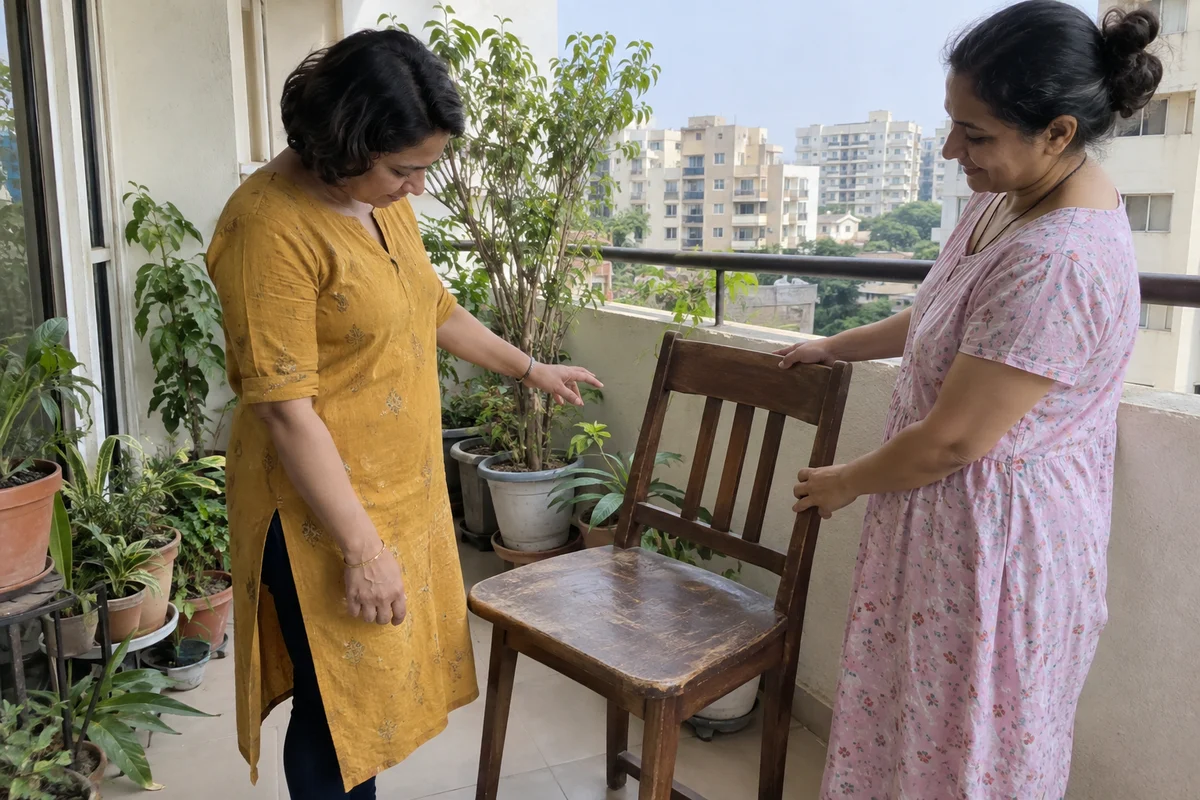
The photo may show the right chair in the wrong size, the right phone with the wrong storage, or the right shoes in a colour the buyer would never wear. The traveller can be standing in front of the item, ready to help, and still have no safe answer to a basic question. Is this close enough?
Buy-for-Me works only when the buyer makes those decisions before the traveller reaches the shop or seller. My rule is simple. The person spending the money defines the acceptable item. The traveller follows a clear brief and stops when reality falls outside it.
Start with an identifier, not a screenshot
A screenshot is useful evidence of the item you noticed. It is weak as the only instruction. Images get cropped, colours shift on screens and similar products can share the same shape. Ask for the product name plus the strongest identifier available, such as a model number, article number, stock keeping unit or direct product page.
Manufacturers use identifiers because product families are not single products. Apple’s own identification page separates iPhones by model number, capacity, colour and region-specific details. “Get the black Pro one” can still describe several different devices.
IKEA India says its product pages include an eight-digit article number, price, size, stock information, materials, measurements, packaging and other details. For a furniture request, the article number and dimensions are far more useful than “the wooden table from that reel”.
The exact-item brief should begin with five lines: item name, identifier, direct source link, required variant and quantity. If a seller cannot confirm the identifier, mark that as uncertainty rather than quietly converting it into confidence.
| Brief field | Good instruction | Weak instruction |
|---|---|---|
| Product identity | Brand, name and model or article number | The one in this photo |
| Variant | 128 GB, blue, India model | Blue phone |
| Quantity | Two sealed units | Get a couple |
| Source | Direct product or seller link | Saw it online |
Reference Apple Support India, Identify your iPhone model · IKEA India, Product article information
Write the variant as a set of non-negotiables
Variant means every choice that can make the item unsuitable. For electronics, that can include storage, colour, model number, plug, included accessories and region. For clothing or sports gear, it can include size, fit, colour and edition. For furniture, it can include dimensions, finish, configuration and whether the item is assembled or flat-packed.
Split the list into required and preferred. Required details decide whether the traveller can buy. Preferred details help choose between two acceptable options. If colour is required, say so. If colour is merely preferred, rank the alternatives.
This is where Buy-for-Me should feel calmer than a live stream of messages. Put the decision into one shared brief before collection. A traveller should not need to reconstruct the buyer’s taste from six screenshots, two deleted voice notes and one “bro, you know what I mean”.
Use the Buy-for-Me page to understand the India-only traveller-assisted buying flow and the checks that belong before purchase.
Reference Apple Support India, Identify your iPhone model · IKEA India, Product article information
 ShipdeHop
Give substitutions a traffic-light rule
The cleanest substitution agreement has three colours. Green means the traveller may buy without asking. Amber means send current evidence and wait for approval. Red means do not buy.
Green should be narrow. It might allow the same item and model in the buyer’s second-choice colour, provided the price stays within the ceiling. Amber could cover a newer model, a different pack size or a small price increase. Red should include a different model family, used instead of new, missing accessories, visible damage or any unlisted substitute.
Silence is not approval. If the buyer does not respond within the agreed window, the default should be stop, unless the brief explicitly contains a green option. This protects both people from a rushed guess.
Stock also needs a rule. IKEA’s official stock guidance tells shoppers to search by product name or eight-digit number, select a store and check in-store stock or a restock date. Availability can change, so the brief should say what to do when the exact item is absent rather than assuming the traveller will improvise.
| Signal | Example | Traveller action |
|---|---|---|
| Green | Exact model, second-choice colour, within ceiling | May buy |
| Amber | Different pack size or price above ceiling | Send evidence and wait |
| Red | Different model, condition or missing part | Do not buy |
| No reply | Buyer misses approval window | Use agreed default, usually stop |
Reference IKEA India, Stock availability guidance
Set one complete-cost ceiling
A product budget is not always the complete purchase budget. Write the maximum item price and the maximum complete amount separately. The complete amount can include the item, taxes shown by the seller, an agreed traveller contribution, parcel packing and any collection expense the buyer has agreed to cover.
Consider an illustrative request with an item ceiling of ₹2,500. The buyer also allows up to ₹250 as a traveller contribution and ₹100 for required protective packing. The complete ceiling is ₹2,850. Those figures teach the structure. They are not a quoted ShipdeHop price or a promise that any item or journey is available.
If the item is ₹2,450 but packing and the agreed contribution push the complete total to ₹2,900, the traveller does not have permission to solve the gap personally. The answer is ask or stop. Friendly reimbursement plans have a remarkable ability to become accounting archaeology.
Use the complete purchase calculator to enter your own item and collection costs. ShipdeHop takes zero commission, but the item and agreed real-world expenses still exist.
| Illustrative cost line | Maximum |
|---|---|
| Item price | ₹2,500 |
| Traveller contribution | ₹250 |
| Required protective packing | ₹100 |
| Complete purchase ceiling | ₹2,850 |
Define checks the traveller can actually perform
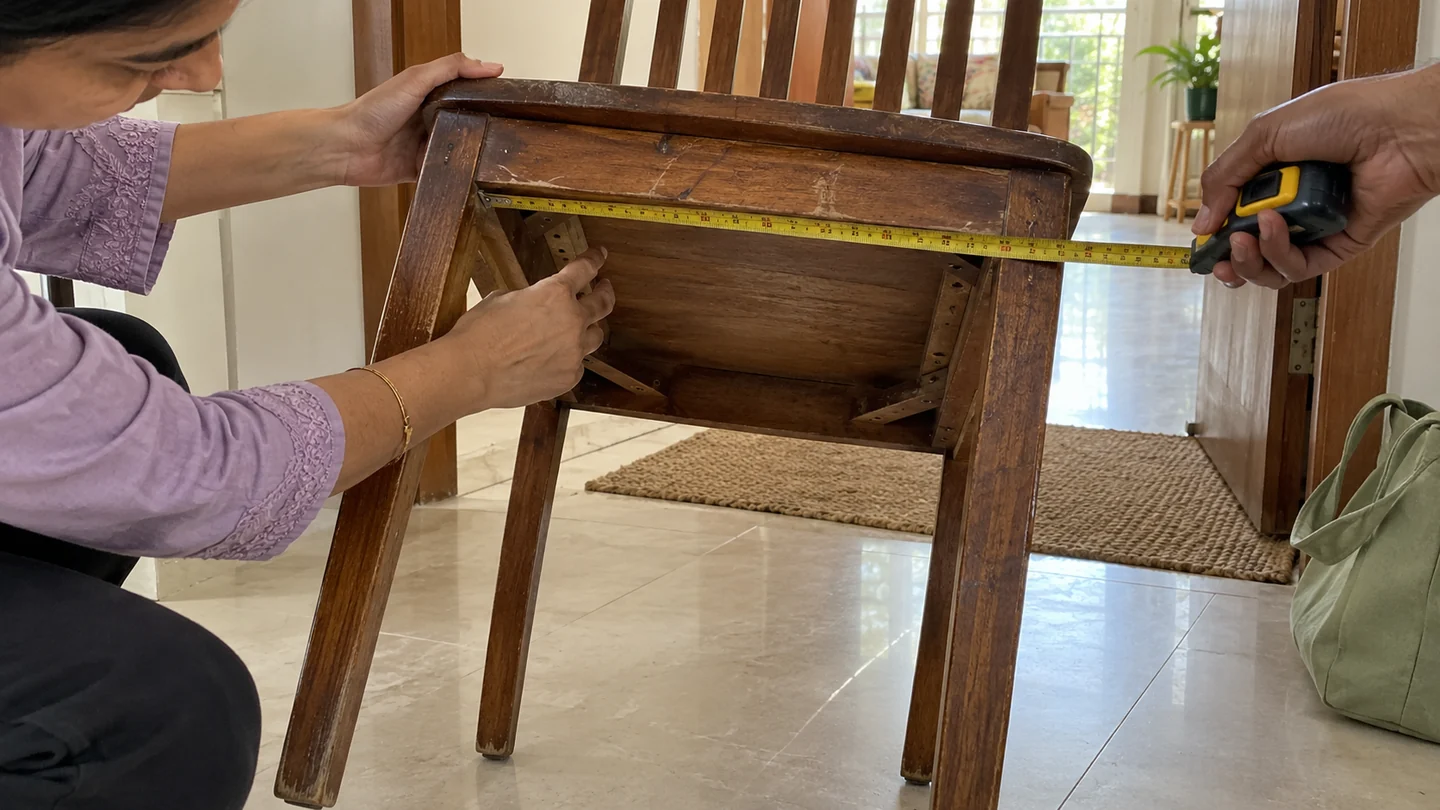
A traveller is not automatically a product expert. Ask for visible, bounded checks. Confirm the sealed model label, photograph the article number, count the pieces, check for obvious cracks, compare the colour in ordinary light or verify that the packed dimensions match the brief.
Do not write “make sure it is genuine” unless the traveller has an agreed and credible way to do that. Do not turn collection into a technical diagnostic without discussing it first. A five-minute visible check is different from testing a used laptop battery, authenticating jewellery or judging whether furniture has hidden insect damage.
Create a short evidence list. It might require one photo of the product label, one full-item photo, one close-up of any visible defect and a copy of the bill. The buyer then approves an amber situation or rejects it before purchase.
The marketplace safety guide is useful when the item comes from an individual seller. Identity verification is one check. It does not inspect the product, guarantee behaviour or replace the buyer’s decision about condition.
- Check only the exact fields written in the brief.
- Photograph identifiers and visible condition with the seller’s permission.
- Do not promise authenticity, performance or hidden-condition findings.
- Stop if the product, price, person or collection point changes.
 ShipdeHop
Assign the receipt and return responsibility before buying
The buyer, traveller and seller have different responsibilities. The buyer defines the item and approves exceptions. The seller describes and supplies it. The traveller performs only the agreed purchase and visible collection checks. Write that division down.
Also decide who keeps the bill, whether the packaging must remain sealed, who contacts the seller about a defect and whether the traveller is expected to carry a return. A return is a new task unless the original agreement clearly includes it.
Retailer policies vary by category, condition, timing and purchase channel. Never assume that an exchange is automatic because the item is unused. Check the seller’s current terms before purchase and capture the proof needed for that seller’s process.
Do not hand over account passwords, email sign-in links, payment authentication codes or Aadhaar OTPs. Purchase evidence and authentication secrets are different things. Keep the current product availability page nearby because website planners do not create a live booking or payment, and production escrow is not currently available.
Copy this exact-item brief before anyone travels
Send one message that can be read without the previous chat: “Please buy [item name] with [model, article or SKU] from [seller or link]. Required variant is [size, colour, capacity, finish and region if relevant]. Quantity is [number]. Item price ceiling is ₹[amount] and complete purchase ceiling is ₹[amount].”
Continue with the decision rules: “Green substitutions are [list]. For amber changes, send [required photos or details] and wait for my written approval. Red changes are [list]. If I do not reply within [time], do not buy.”
Finish the handoff: “Please perform only these checks: [list]. Keep [bill, packaging or accessory]. Collection point and time are [details]. Recipient and window are [details]. If the product, price, seller, packed size or handoff changes, stop and reconfirm.”
Then ask the traveller to repeat the model, complete ceiling and stop rule. That small confirmation catches the expensive mistakes. A useful purchase connection begins when both people are looking at the same item, not merely the same photo.
What does the complete purchase cost?
Change the amounts to match your proposed arrangement. Include every relevant expense.
Questions, answered
What should an exact-item purchase brief include?
Include the product name, model or article number, direct source link, required variant, quantity, condition, item price ceiling, complete purchase ceiling, allowed substitutions, collection checks, receipt requirements and the stop rule for changes.
Is a product screenshot enough for Buy-for-Me?
No. A screenshot may omit the model, capacity, size, seller, price, condition or regional variant. Use it as supporting evidence, then add a written identifier and the exact acceptable variant.
Can the traveller choose a similar item if mine is unavailable?
Only if the brief gives that permission. Use green options the traveller may choose, amber changes that need written approval and red changes that must be declined. If there is no response, follow the agreed default.
Who is responsible for inspecting the product?
The buyer should define the checks and the traveller should accept only checks they can reasonably perform. Visible collection checks do not make the traveller an authenticity expert, technician or warranty provider.
Does ShipdeHop take a commission on Buy-for-Me?
ShipdeHop takes zero commission. The item price, an agreed traveller contribution, packing, collection and other real-world expenses may still affect the complete amount. Calculate those separately before approving the purchase.
Sources and useful references
External source pages checked on 22 October 2026. The worked amounts are inputs for the decisions explained above.
- Apple Support India, Identify your iPhone modelChecked 22 October 2026
- IKEA India, Product article informationChecked 22 October 2026
- IKEA India, Stock availability guidanceChecked 22 October 2026

I’m building ShipdeHop around useful connections between people, journeys and pre-loved things. Zero commission. Now and always.
Why I’m building ShipdeHop →