
To send a painting by courier within India, first identify the artwork, frame and any glazing, then confirm that the selected service accepts the complete packed piece. Compare shipping it as-is with an expert-approved format change or specialist transport. Include packing, collection, receiving and any reframing costs. Do not roll a painting or remove its glazing merely to obtain a smaller parcel quote.
A painting can be light enough to lift with one hand and still be the wrong item for an ordinary parcel arrangement. The surface, support, frame and glazing create different questions. A small weight does not answer them.
I would begin with the work itself, not with the cheapest courier search. Decide what must arrive unchanged, who can approve any alteration and who will receive it. Otherwise a lower shipping quote can quietly turn into a new framing bill or a damaged object that cannot simply be replaced.
This guide is for an artist, owner or buyer arranging a domestic India shipment. Primary guidance was reopened on 21 November 2026. It is a planning framework, not a conservation assessment, tested packing design, insurance recommendation or promise that a carrier accepts a particular painting.
Describe the painting before describing the parcel
Write a short artwork brief: original or reproduction, medium if known, support such as paper, board or stretched canvas, framed or unframed, and whether glazing is present. Record the work's dimensions separately from the frame's outside dimensions. Add anything projecting, loose or already damaged.
Ask the artist, gallery, owner or an appropriate conservator about condition-specific handling needs. If the surface is recently worked, delicate or unfamiliar, do not guess whether it can touch wrapping or travel now. An instruction that suits a reproduction print may not suit a painted surface.
Create a private condition record before packing. Photograph the whole front and back, frame edges, existing marks and any identifiers needed for this transaction. Describe observations rather than claiming the work is professionally assessed. Keep ownership paperwork and sensitive information out of public parcel descriptions.
Compare three shipment routes before choosing one
My preferred shortlist has three routes: ship the complete framed piece, change the shipping format only with suitable approval, or obtain specialist art-transport advice. The right choice depends on what the object can tolerate and what each arrangement actually includes.
Removing a frame, glazing or stretcher is not automatically a harmless money-saving step. Nor is rolling every canvas a valid shortcut. If an artist, framer or conservator approves a change, price the work at both ends and confirm that the recipient accepts the changed format.
Use the table as a decision aid, not a ranking. If no appropriate person can establish that a format change is suitable, leave that option unresolved. The freight quote does not grant permission to alter somebody's painting.
| Route | Confirm first | Cost beyond carriage | Reason to pause |
|---|---|---|---|
| Complete framed piece | Work, frame, glazing and packed size are accepted | Appropriate packing and receiving access | Carrier or packer has not accepted the exact configuration |
| Approved format change | Who may alter it and whether the work tolerates that change | Preparation, new protection and reassembly or reframing | Suitability or owner permission is uncertain |
| Specialist transport | Scope for this object, route and receiving location | Assessment, custom protection and agreed handling | The proposal does not define responsibilities or exclusions |
Protection has several jobs, not one magic material
The Canadian Conservation Institute's artwork-transport bulletin describes primary packaging as support or protection close to the object, often forming the basis for further protective packaging. It also cautions that guidance cannot provide complete protection in every situation. That is a useful boundary for any confident packing recipe.
FedEx's US artwork guide separately discusses surface shielding, cushioning and a rigid outer container. I am using that page for general packaging concepts, not its US boxes, prices, service availability or liability terms in India. Obtain a suitable specification for the actual work and the Indian service you are considering.
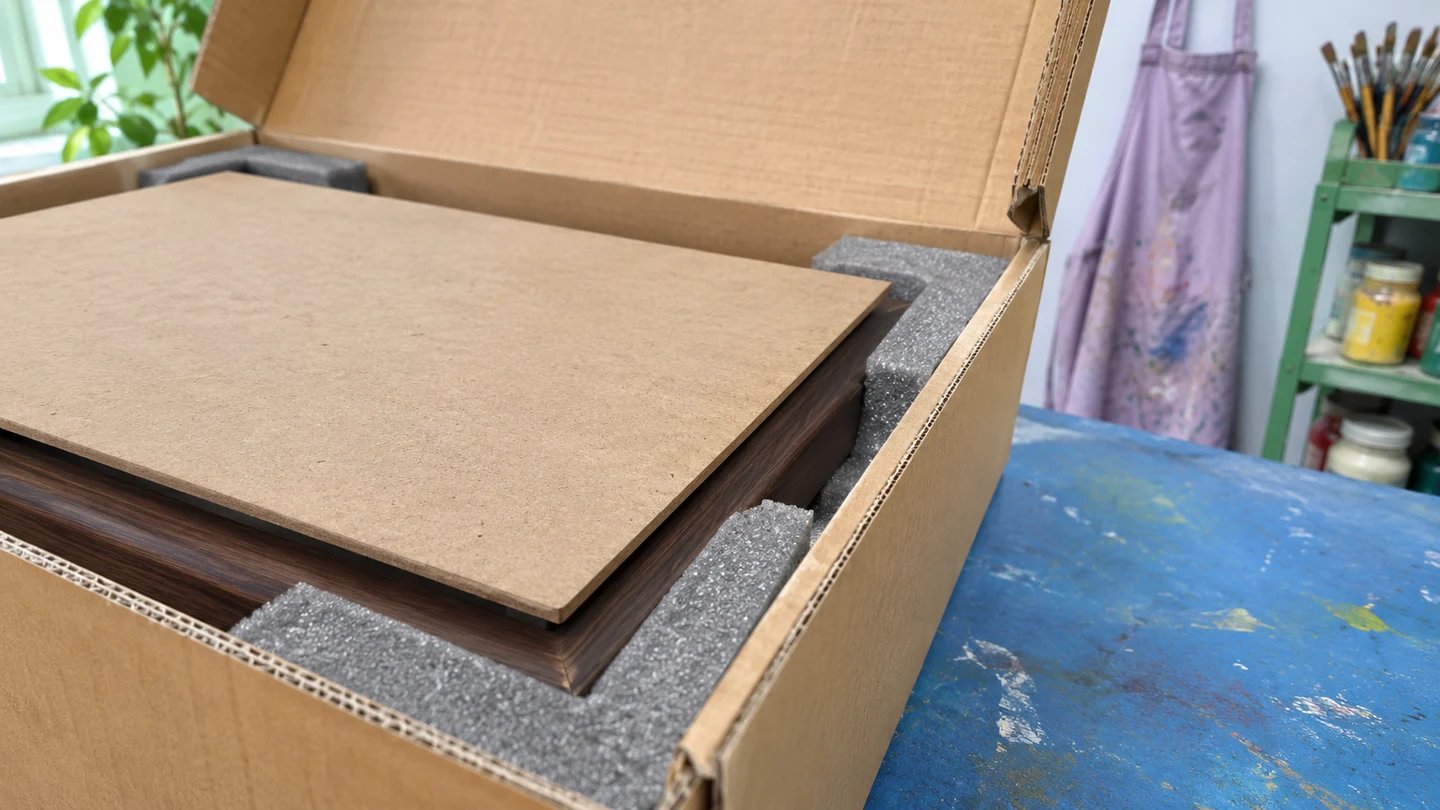
Ask the packer to explain what protects the surface, what prevents unwanted movement, how vulnerable edges are protected and what the outer package is designed to withstand. Do not let a layer count replace those answers. Keep adhesives and other materials away from the artwork unless an appropriate expert has approved their use for that surface.
Glass or other glazing needs explicit disclosure. Do not assume that tape, an extra sheet of board or the word fragile makes every glazed frame suitable for a parcel network. Ask what the selected service and packer accept. If the work is unusually valuable, delicate or irreplaceable, seek specialist assessment before arranging ordinary collection.
Reference Canadian Conservation Institute: effective protective packaging and transport for artwork · FedEx US artwork guide: general protection principles, not India service terms
Get a quote for the finished package, not the artwork alone
Measure the outside length, width and depth after the protective design is settled, and establish packed weight in kg. An unframed artwork measurement is not a shipping-box measurement. Keep both in the brief so a person quoting can see which one they are reading.
DTDC's current Personal Courier page identifies weight, dimensions, distance and the chosen service as pricing inputs. It also says restricted contents may need special approval. That is not a blanket acceptance of a painting, glass-fronted frame or declared value. Ask about your actual contents, package and addresses.
Give each provider the same brief: the artwork configuration, glazing if present, packed external dimensions, packed weight, collection address, receiving address and required timing. Ask which service is being quoted, whether collection and packing are included, what acceptance conditions apply and what receiving evidence is available.
If one provider wants the package changed, obtain the revised packed measurements and re-quote the complete task. Do not compare a small unprotected-piece quote with a larger protected-piece quote and call the difference a saving.
Reference DTDC Personal Courier: pricing inputs and contents acceptance guidance
Build the full domestic artwork budget in INR
Separate confirmed spending from unresolved questions. I would use the following ledger for each acceptable route. An unknown amount stays unknown until you have a quote or decide not to proceed. It does not become zero because the courier form has no field for it.
Keep optional reserves outside the expected total. A reserve for a possible problem is a personal planning choice, not a current price or a forecast of damage. Likewise, do not assume that a possible reimbursement will fund costs you need to pay today.
Reframing is especially easy to forget. An expert-approved smaller shipping format may still cost more overall once the destination work is included. If the recipient wants the original frame retained, a smaller-format alternative may not meet the task at all.
| Budget line | Record in INR | Comparison check |
|---|---|---|
| Preparation | Assessment, permitted dismantling and materials | Who authorised any alteration? |
| Packing | Labour and specified protective package | Is the final package included in the quote? |
| Collection and carriage | Current quote for the accepted package and route | Are access and pickup costs included? |
| Receiving | Necessary handling, unpacking or temporary storage | Can the intended person actually receive it? |
| Destination work | Approved reassembly or reframing if relevant | Does the recipient accept the final form? |
| Agreed protection charges | Only charges actually offered and selected | What terms, limits and exclusions apply? |
Keep value, acceptance and liability as separate questions
Tell the carrier what is actually inside and provide the value information it requires through its official booking process. Ask what evidence is needed to support that value. Do not conceal a painting as generic stationery to make a booking easier.
Then read the actual terms for the selected Indian service. Acceptance of the parcel, a declared value and any optional protection are different facts. Ask about exclusions for artwork, glazing, inadequate packing and any evidence or reporting requirements that apply. Do not assume writing a value creates an automatic right to full reimbursement.
My decision rule is to resolve these questions before collection when the financial or personal consequence matters. If a work has sentimental value that money cannot replace, acknowledge that separately. A compensation figure cannot make that consequence disappear.
Keep the quote, accepted contents description, relevant terms and packing record with the booking reference. This is administrative preparation, not a guarantee about a claim outcome. Use the carrier's official support process if something changes.
Make arrival and unpacking part of the plan
A gallery reception desk, private apartment and exhibition venue do not have identical receiving arrangements. Confirm the intended person, access, opening or meeting window and any help needed to handle the packed size. A building being open is not confirmation that the artwork can be received.
Tell the recipient what package to expect and share the necessary reference privately. Agree who may unpack it and whether an artist, framer or other specialist should be present. Do not arrange a format change at origin while leaving the recipient to discover the consequences on arrival.
Before discarding protective materials, follow the applicable service and packing-provider instructions for checking the delivery and reporting any issue. Record the package and visible condition without improvising a repair or disturbing delicate surfaces.
The general parcel-planning guide starts with contents and both handoffs. For artwork, add an explicit unpacking boundary: receiving a box is not the same task as safely removing and assessing the work inside.
Use this painting-shipment stop/go checklist
Proceed only when the whole route is described. An enthusiastic yes to carrying a box is not an answer to the other questions. If a critical answer changes after packing, update the brief and obtain confirmation again.
I would keep the following list with the quote rather than buried in separate messages. It should be clear enough that a packer, sender and recipient can identify the same object and the same plan.
- The actual work, support, frame and any glazing are described.
- The owner has approved the shipping format and any proposed alteration.
- An appropriate packing approach has been agreed for this particular work.
- The selected service has accepted the real contents and finished package.
- Packed dimensions, weight, addresses and timing match the final quote.
- The receiving person and any unpacking or reframing work are arranged.
- Current terms, value evidence and reporting requirements are understood.
Where ShipdeHop fits, without pretending every painting is suitable
ShipdeHop is India's people-powered super app connecting shared journeys, parcels and exchanges. ParcelPool planning can help describe a parcel and its handoffs, but a matching route is not proof that a painting fits a traveller's vehicle, handling capability or service rules.
Read the prohibited-items guidance and current availability before proposing an existing-journey arrangement. A framed or delicate work may need a different transport option. Never persuade somebody to accept an undisclosed glazed frame or use identity verification as a substitute for object-specific assessment.
The website's planning tools do not create live matching, bookings or payments. ShipdeHop takes zero platform commission, now and always, but packing, agreed contributions and connecting journeys remain costs. It offers no in-app payment or escrow, and Aadhaar verification does not inspect the artwork or guarantee conduct.
The planning calculators are useful only for the decisions they model. The traveller parcel calculator is not an artwork-shipping tariff, conservation assessment or liability calculator. Use the itemised sender budget above for this decision. I would choose an acceptable complete plan, even when that means specialist transport instead of a shared journey.
Reference ShipdeHop current product availability and planning limitations
Finish with one useful decision, not a universal courier recommendation
Compare your accepted plans using the same final outcome: the intended work reaches the intended person in the approved form, with the receiving work and cost understood. A headline delivery rate does not describe that outcome on its own.
If you need to organise contribution or connecting-journey inputs, use the planning calculators with your own numbers and keep their scope clear. For the painting itself, retain the format matrix, finished-package quote and full sender ledger.
The cheapest acceptable option is different from the cheapest option you can enter into a booking form. For something made to be looked at, that distinction is worth looking at properly.
Use the savings and contribution calculators with your own costs.
Questions, answered
Can I send a glass-framed painting by an ordinary courier?
Do not assume so. Disclose the glazing, artwork, packed dimensions, weight and value information, then obtain acceptance for the selected service and a suitable packing approach. A fragile label or extra wrapping is not blanket approval.
Should I roll a canvas to reduce courier cost?
Only consider a format change after the artist, owner and an appropriate expert establish that it is suitable. Include preparation and any destination stretching or reframing in the comparison. Not every painting can be rolled without harm.
How much does it cost to courier a painting within India?
Obtain a current quote for the finished accepted package and actual route. Add assessment where needed, packing, collection, receiving and any approved reframing costs. This guide does not provide invented nationwide rates or imply that artwork dimensions equal parcel dimensions.
Does declaring the painting's value guarantee reimbursement?
No automatic guarantee should be inferred. Check the actual selected service's terms, exclusions, required evidence and any optional protection separately. Acceptance, declared value and a successful claim are different questions.
Can a ShipdeHop traveller carry my framed artwork?
Only consider it when the actual contents are permitted and disclosed, the protective package genuinely fits, the traveller willingly accepts the handling and both handoffs work. A shared destination or identity verification does not establish suitability. Use another appropriate option when those conditions cannot be met.
Sources and useful references
External source pages checked on 21 November 2026. The worked amounts are inputs for the decisions explained above.
- Canadian Conservation Institute: effective protective packaging and transport for artworkChecked 21 November 2026
- FedEx US artwork guide: general protection principles, not India service termsChecked 21 November 2026
- DTDC Personal Courier: pricing inputs and contents acceptance guidanceChecked 21 November 2026
- ShipdeHop current product availability and planning limitationsChecked 21 November 2026

I’m building ShipdeHop around useful connections between people, journeys and pre-loved things. Zero commission. Now and always.
Why I’m building ShipdeHop →