
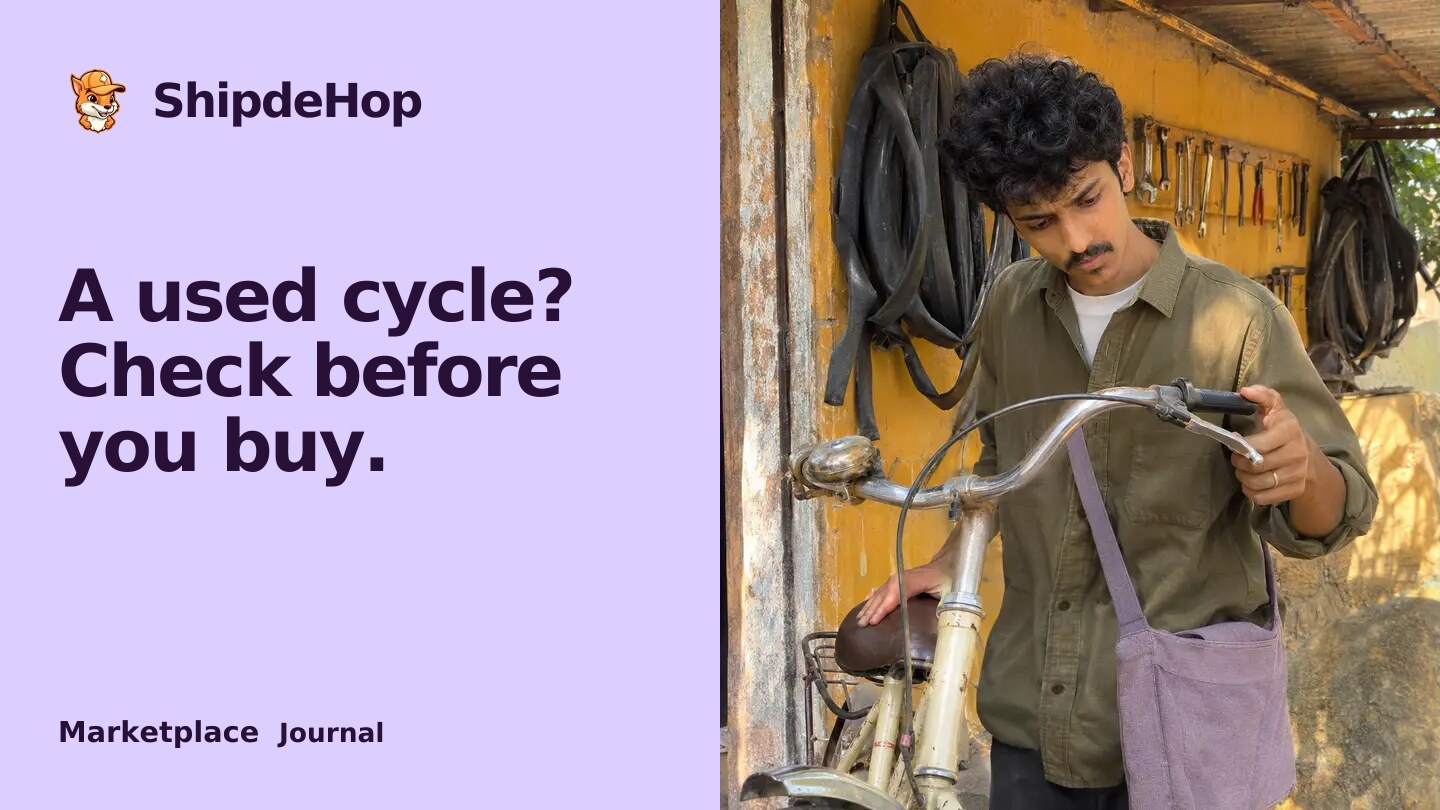
Buy a second-hand cycle only when it fits your intended riding, its condition can be assessed and the complete purchase makes sense. Check the actual bicycle before payment, ask a competent mechanic about uncertain faults, and include repairs, essential equipment and collection in your budget. A low listing price cannot fix the wrong frame size or unresolved damage.
A second-hand cycle can be a sensible way to start commuting, get around campus or see whether weekend riding actually survives the first weekend. It can also be a very reasonably priced collection of things that need replacing.
I would not start with the number of gears or the original showroom price. I would start with three gates: does it fit the job, can its condition be understood, and does the complete purchase still beat the alternatives?
This guide is for pedal bicycles bought within India, not motorcycles or an e-bike battery assessment. I reopened the cycling organisations' guidance and ShipdeHop's current product pages on 5 November 2026. The mechanical sources are international, so the checks below are not claims about Indian warranties, legal ownership requirements or local service availability.
Gate one: buy the cycle for the ride you will actually do
Write down the ordinary trip first. How far is it, where will you park, and will you carry the cycle upstairs? A short ride to college with a bag has different priorities from a long recreational ride. The cycle should suit that routine, not the imaginary version of you who rides mountain trails before breakfast.
Ask for the exact model, frame size and current photographs. A wheel-size label alone does not tell you whether the bicycle fits. If you do not know how to assess fit, arrange help from someone competent before buying. Do not assume raising or lowering the saddle can solve every mismatch.
London Cycling Campaign's second-hand buying guidance recommends bringing an experienced friend if you are new to the process and treats the frame and fork as important inspection areas. Its advice supports getting help, not declaring a bicycle sound from a listing photo.
Make practical access part of fit. Can you lift the cycle into your storage area? Is there somewhere to secure it at both ends of the trip? A technically impressive bargain that spends its life blocking a shared hallway has failed a rather basic test.
Reference London Cycling Campaign's own second-hand bicycle buying guidance
Shortlist the actual bicycle, not the catalogue picture
Before travelling to a viewing, ask for one complete side view of the actual bicycle, the model and size marking, close views of known damage and a list of included equipment. Ask how long the seller has owned it, why it is being sold, what maintenance has been done and whether it has been in a crash. Treat answers as claims to check, not a service certificate.
Ask about the purchase invoice or other reasonable ownership history where available. Inconsistent explanations or refusal to discuss the bicycle's history are reasons to pause. Do not demand that someone publish identity documents, home addresses or a full serial identifier in a public listing.
Agree a daylight meeting where inspection is permitted. If you want a mechanic to inspect it, get the seller's agreement and confirm the shop will take the task before bringing the bicycle there. Neither the seller nor the shop should discover the plan when you arrive.
Keep the shortlist narrow. One seller who provides precise current evidence can be worth more of your attention than ten listings saying 'almost new, urgent sale'. Urgency is the seller's timeline. It does not have to become your buying method.
Gate two: separate an observation from a mechanical verdict
REI's own pre-ride inspection guidance covers air, brakes and chain, wheel movement, gears and the frame. It says not to ride with a cracked frame or loose headset, and recommends bike-shop attention for a specific problem. Those are useful boundaries for a viewing, not permission to test a questionable bicycle in traffic.
Look at what you can actually observe, then stop where your knowledge stops. A scuff can be described and photographed. Whether damage is only cosmetic may need expert assessment. A short video of a spinning wheel does not certify the whole bicycle.
Use this table to decide what happens next. Green means the evidence is sufficient for that particular question, not that the cycle is certified. Amber means inspection or a quote must come before a buying decision. Red means stop the proposed transaction rather than bargaining around the uncertainty.
| Question | Evidence to seek | Decision |
|---|---|---|
| Does it fit the intended rider? | Actual frame details and a competent fit check | Proceed only if suitable, reject a clear mismatch |
| Is the item as described? | Current condition and included parts match the agreement | Pause for any undisclosed difference |
| Are there cracks, damage or unexplained movement? | A competent mechanic assesses the concern | No riding or purchase approval while unresolved |
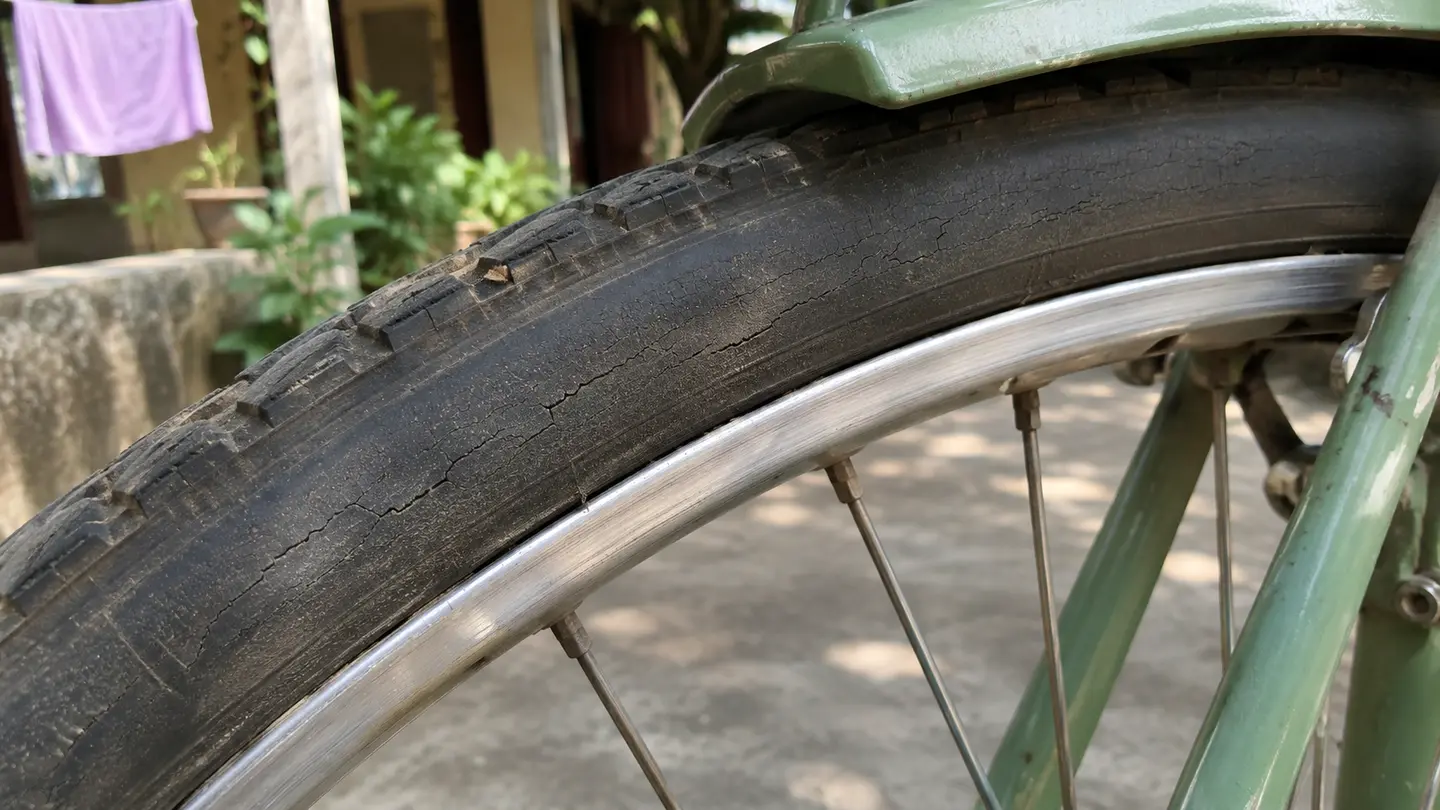
| Are tyres or other parts worn? | Identify the work and get a written local quote | Add the accepted work to the budget |
| Can you inspect before agreeing? | Seller allows the planned viewing or shop check | Decline pressure to skip it |
| Is history reasonably explained? | Consistent model, ownership and maintenance information | Pause if important questions remain unanswered |
Reference REI Expert Advice: pre-ride bicycle inspection and stop conditions
A test ride is not the first safety check
A viewing should not begin with someone saying 'take it round the block' before anyone has looked at the bicycle. REI advises checking brake engagement and wheel security before riding. If the cycle's condition is uncertain, ask a competent mechanic to assess it rather than using a ride to discover whether it stops.
If the bicycle has been assessed as suitable to test, agree permission, a controlled place away from traffic and appropriate protective equipment. Keep the test within your ability. Do not ride without hands, attempt stunts or use speed as a substitute for inspection.
Afterward describe your observations precisely. Was the riding position workable? Did something feel wrong? If the answer needs technical interpretation, take that question back to the mechanic. Comfort and a quiet few minutes do not prove the absence of hidden damage.
Specialist or unfamiliar designs deserve specialist help. Suspension systems, carbon components and modifications can change what needs checking. This article deliberately does not give a universal repair procedure or tell a beginner how to certify those parts.
Reference REI Expert Advice: pre-ride bicycle inspection and stop conditions
Gate three: set your complete-purchase ceiling before negotiating
Decide the maximum you can spend to have a usable cycle, not merely to own it. Include the agreed price, the inspection, identified repairs, necessary equipment and getting it home. Ask the local shop which work is essential before use and which is optional. Keep an unknown repair cost as unknown rather than filling the box with zero.
The negotiating ceiling is simple: your complete budget minus confirmed extra costs. If the seller's price is above that ceiling, the purchase does not fit your budget even if it is below the original retail price. Do not postpone essential work just to make the asking price appear affordable.
Compare against another actual option for the same use. A cheaper basic cycle that is the right size and has understood condition may be more useful than a higher-spec model with unresolved work. Use current comparable quotes, not an invented percentage depreciation rule.
The marketplace calculator can help you put the purchase, repairs and collection on one page. Enter your own amounts. ShipdeHop's zero commission does not erase a shop bill, a lock or a vehicle charge.
| Budget line | What to record | Before agreeing |
|---|---|---|
| Cycle price | The actual negotiated amount | Identify exactly which bicycle and parts are included |
| Inspection and essential work | Local quote and any unresolved diagnosis | Do not ride before required work is completed |
| Necessary equipment | What you do not already own for this intended use | Keep essential items in the budget |
| Collection | Your travel or suitable transport quote | Confirm capacity, access and responsibility |
| Uncertainty | Any unquoted fault or incomplete check | Resolve it or decline, do not call it a saving |
Reference ShipdeHop Marketplace planning and zero-commission information
Choose collection after inspection, not instead of it
Do not assume you can ride the cycle home. That depends on its assessed condition, your ability and a suitable route. A bicycle needing work may require transport to a workshop. Confirm the vehicle or other collection method can take the actual dimensions without damaging the cycle.
If parts must be removed, agree who is competent to do that and who will reassemble and check it before use. A carpool seat is not an agreement to transport a bicycle, and an existing traveller journey does not automatically have spare cycle capacity.
A friend or collector can send the agreed photographs and confirm that included parts are present. They are not automatically a bicycle mechanic. The inspection-before-collection guide explains that difference. For this purchase, ask the buyer to approve the actual evidence before anyone accepts a changed item.
Follow the safety checks for identity and handoffs. Aadhaar identity verification does not inspect the cycle, certify ownership or guarantee its condition. Keep login and identity authentication codes private, and do not let a reassuring badge replace the physical assessment.
Reference ShipdeHop official identity, inspection and collection boundaries
The message I would send before a used-cycle viewing
Try this: 'I am looking for a pedal cycle for [ordinary use]. Please confirm the exact model and frame size, current condition, known damage or crash history, maintenance and included parts. Could you send current photographs of the actual cycle? I would like to inspect it at [agreed place] and, if needed, arrange a mechanic's check before deciding. Please also confirm the asking price and collection arrangements.'
Add your non-negotiables before the meeting. That might be a suitable fit, an agreed inspection, understood essential work and an achievable total budget. A seller can choose not to accept your process. You can choose not to buy. Neither requires a dramatic argument.
Use the second-hand marketplace planner to record the item, condition questions and collection needs. The website creates a browser-local plan, not a live listing, reservation or payment. The current availability page says production payment collection and escrow are disabled. Check the app for actual options. The launch scope remains within India.
I want a pre-loved purchase to earn its place in your life. For a cycle, that means something you can use appropriately after the necessary checks, not a bargain you keep explaining to your friends while it waits for repairs.
Reference ShipdeHop current website, payment and app availability facts
What does the complete purchase cost?
Change the amounts to match your proposed arrangement. Include every relevant expense.
Questions, answered
Is buying a second-hand cycle in India worth it?
It can be when the cycle suits the rider, its condition is understood and the complete purchase fits the budget. Compare the price plus inspection, essential repairs, equipment and collection against a real suitable alternative.
What should I check before buying a used bicycle?
Start with model, frame size, history, actual condition and included parts. Arrange competent assessment of mechanical or structural concerns. Use the evidence table to separate acceptable wear, quoted work and unresolved reasons to stop.
Should I test ride a second-hand cycle before buying?
Only after condition and basic pre-ride checks make a test appropriate, with the seller's permission and a controlled place away from traffic. Do not ride a bicycle with unresolved safety concerns to find out whether it works.
How much should I budget for used-cycle repairs?
Get an inspection and local quote for that exact bicycle. There is no reliable universal repair allowance. Subtract confirmed extra costs from your full budget to set a buying ceiling, and resolve unknown work before committing.
Can someone collect the bicycle on my behalf?
Yes, if everyone agrees to the specific arrangement and suitable transport exists. Give the collector a clear evidence brief, but use a qualified mechanic for technical assessment. Collection does not itself prove ride-readiness.
Sources and useful references
External source pages checked on 5 November 2026. The worked amounts are inputs for the decisions explained above.
- London Cycling Campaign's own second-hand bicycle buying guidanceChecked 5 November 2026
- REI Expert Advice: pre-ride bicycle inspection and stop conditionsChecked 5 November 2026
- ShipdeHop Marketplace planning and zero-commission informationChecked 5 November 2026
- ShipdeHop official identity, inspection and collection boundariesChecked 5 November 2026
- ShipdeHop current website, payment and app availability factsChecked 5 November 2026

I’m building ShipdeHop around useful connections between people, journeys and pre-loved things. Zero commission. Now and always.
Why I’m building ShipdeHop →