
For multiple local deliveries, compare an accepted Porter trip containing every required stop with DTDC quotes for every parcel, not one headline fare against one courier charge. Check the combined load, each recipient's availability and the handling of a failed handoff. Divide by the same number of intended deliveries only after calculating the complete batch cost.
Two parcels leaving the same room are not automatically one delivery job. They may have different recipients, different receiving windows and different instructions if somebody is absent. I would settle those details before deciding that a multi-stop trip is cheaper.
This guide is for a small sender comparing several prepared parcels going to addresses within one Indian city. It compares Porter's published added-stop option with DTDC parcel booking. It does not assume a vehicle is available, promise that a courier will combine consignments into your preferred route, or rank either provider's reliability.
Compare a whole trip with a whole set of parcels
Porter's official Bengaluru two-wheeler page, reopened on 25 November 2026, tells senders to enter pickup and drop addresses and add other stops if needed. It also publishes a capacity limit and says pricing depends on distance, time, area and applicable additions. Treat that as evidence of the described city offering, not confirmation of your requested itinerary.
DTDC's Personal Courier page, checked on the same date, describes online and store booking, pickup or drop-off, and a tracking number for each shipment. Its published pricing factors include weight, dimensions, distance and service. Request the appropriate accepted arrangement for the actual batch.
The comparison is therefore not one bike versus one box. On the Porter side, submit all required stops and the full load. On the DTDC side, obtain the applicable offer for every consignment, including any confirmed combined-pickup arrangement. Do not assume either provider will organise the job exactly as you imagined.
Reference Porter Bengaluru two-wheelers: added stops, capacity and pricing factors · DTDC Personal Courier: booking, per-shipment tracking and rate factors
Use this batch comparison table before asking who is cheaper
The table separates the published product descriptions from the decisions you must confirm. It is not a completed delivery test. The final row is my planning requirement for both options, not a claim about additional provider features.
Porter describes adding stops within its local trip flow. DTDC describes a parcel service with shipment tracking. Confirm the actual accepted batch rather than treating those descriptions as identical services.
| Batch question | Porter added-stop trip | DTDC parcel bookings |
|---|---|---|
| Booking unit | Local app flow describes adding stops | Parcel flow provides a tracking reference per shipment |
| What to quote | Actual itinerary and full prepared load | Every accepted parcel and selected service |
| Capacity and price evidence | City page publishes load limit and distance/time-related pricing | Personal Courier names weight, dimensions, distance and service |
| Recipient coordination | Confirm each stop's access and receiving availability | Confirm each parcel's address and receiving needs |
| Changes after enquiry | Reconfirm itinerary and applicable fare | Reconfirm affected consignment and applicable charge |
| Before dispatch | All packages and all stops must be accepted | All parcels and the collection arrangement must be accepted |
Reference Porter Bengaluru two-wheelers: added stops, capacity and pricing factors · DTDC Personal Courier: booking, per-shipment tracking and rate factors
Make a stop-to-package manifest
Give each parcel a private identifier and link it to one intended receiving address. For example, package A belongs to recipient A and package B belongs to recipient B. Keep the visible carrier labels compliant with the chosen provider's instructions. Your private list supplements those labels rather than replacing them.
For each destination record the recipient contact, actual receiving window, access requirement and what should happen if the recipient cannot receive. Do not publish customer addresses or phone numbers in a shared social post. Give necessary information only through the appropriate booking and handoff channels.
Use the parcel preparation guide to organise contents, packed measurements and acceptance questions. Then follow the actual provider's rules. The same batch can contain one easy package and one unsuitable item. Acceptance of the first does not settle the second.
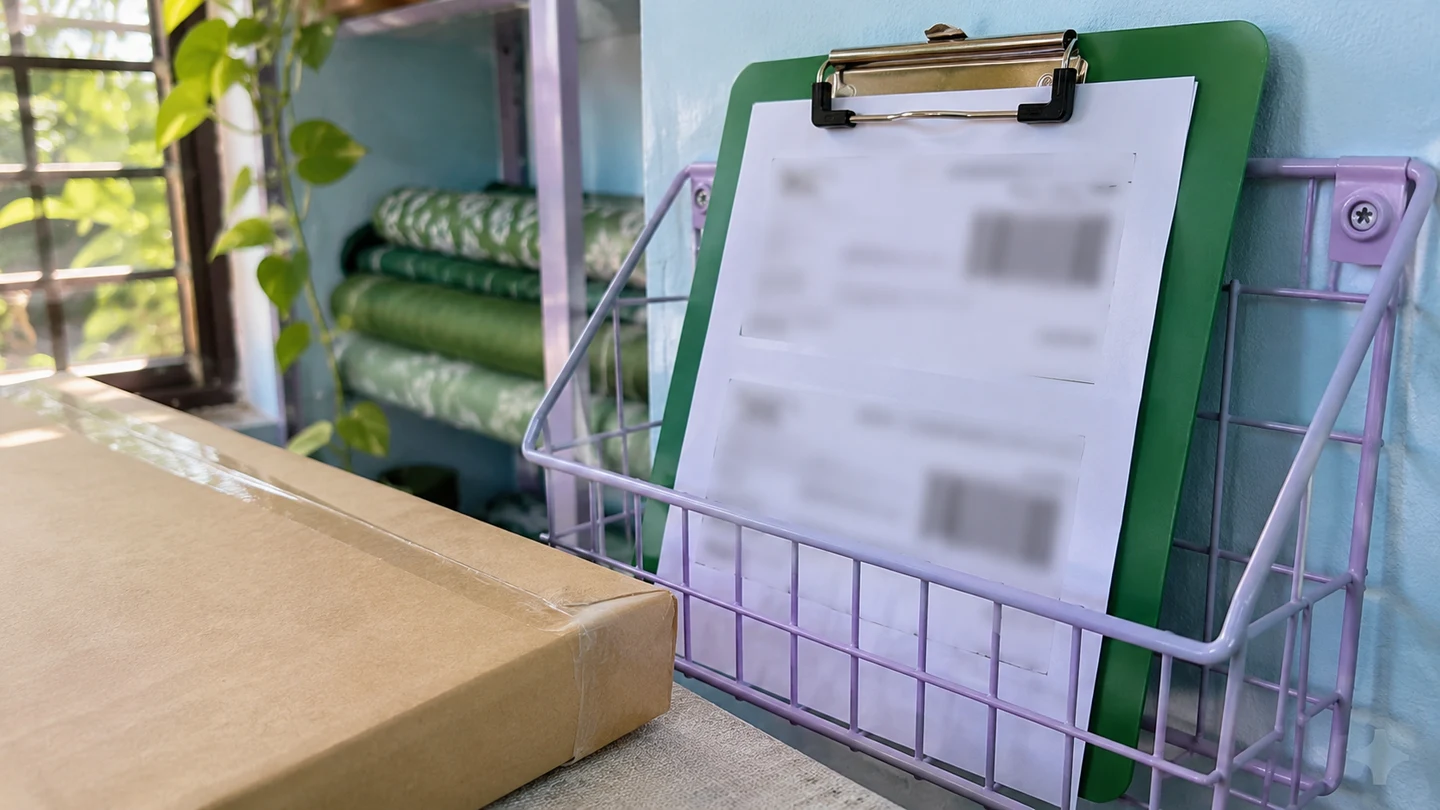
Before release, count the packages against the manifest. If a parcel is removed or added, update both the contents record and the transport enquiry. A prepared dispatch rack is useful only when the booking describes what is actually on it.
Check the combined load rather than each parcel in isolation
A per-vehicle limit is not an allowance repeated for every stop. Add the prepared weights of the packages carried together, and disclose their outside dimensions and handling needs. A light but awkward batch can still be unsuitable for the proposed vehicle.
Porter's Bengaluru two-wheeler page displays a 20 kg limit. That figure does not approve every shape, content or multi-stop request below it. Confirm the actual prepared batch and itinerary in the relevant service. Do not move a mini-truck rule into a two-wheeler booking.
For courier enquiries, give the appropriate measurements for each parcel and ask how the selected service will charge them. Do not hide a large package inside an average batch weight. The quote should describe the job you will hand over, not a tidier spreadsheet version of it.
Reference Porter Bengaluru two-wheelers: added stops, capacity and pricing factors
Calculate the whole-batch cost on an equal basis
Write the Porter total as the accepted itinerary amount plus confirmed necessary costs outside it. Write the DTDC total as the accepted amounts for all parcels plus confirmed necessary costs outside those quotes. Add packing, own drop-off travel or other actual preparation once, where relevant.
Keep required but unquoted work visible. If an option needs a second dispatch because the receiving windows conflict, include that accepted plan in the comparison. Do not assume a free second attempt, return or extra stop simply to make an option win.
Only after building those totals should you divide by the same number of intended deliveries to understand the proposed cost allocation. This is a budget for the planned batch, not a claim about the cost per successfully completed delivery. Actual exceptions may change the final spend.
Record effort alongside INR: preparation, attendance and any own travel in minutes. There is no need to invent a wage or forecast a saving. If one plan cannot meet an essential receiving window, its lower price does not make it equivalent.
For a single-parcel question, the existing same-city comparison focuses on arrival rather than pickup. This batch framework adds package-to-recipient mapping, load aggregation and multiple handoff compatibility. Keep those extra decisions in view rather than merely multiplying a one-parcel estimate.
Keep a traveller alternative separate from commercial carrier promises
ParcelPool may be worth exploring for a disclosed parcel that genuinely fits somebody's existing domestic journey. Do not assume one traveller accepts a series of delivery stops because the origin and destination cities match.
Use the parcel contribution calculator for that traveller arrangement only, with its agreed contribution and actual extra expenses. It is not a Porter fare calculator or a DTDC tariff engine. Keep commercial offers as separate alternatives with their own obligations.
ShipdeHop is an India-focused people-powered super app. The availability page, checked on 25 November 2026, says website plans do not create live listings, matches, bookings or payments. It links the iPhone app and says a public Google Play listing has not been verified.
ShipdeHop takes zero platform commission, now and always. No live escrow is offered. Aadhaar identity verification does not inspect parcels or guarantee behaviour. My choice would be the accepted plan that accounts for every package and every recipient at a complete cost I can actually explain.
Reference ShipdeHop: current India scope, plans and app availability
What remains after extra expenses?
Change the amounts to match your proposed arrangement. Include every relevant expense.
Questions, answered
Can I add multiple delivery stops to a Porter booking?
The official Bengaluru two-wheeler page describes adding other stops in its booking flow. Confirm the current option, accepted itinerary and full load for the actual service you use. It is not a promise that every city or request supports the same arrangement.
Does the two-wheeler weight limit apply separately to every parcel?
Do not treat a vehicle limit as a fresh allowance for each destination. Disclose the combined prepared load carried together, as well as dimensions and contents, and obtain acceptance for the actual batch.
Will DTDC deliver several parcels in my preferred stop order?
The cited parcel page does not establish that. Ask for the appropriate parcel service and collection arrangement. Do not interpret one sender's batch as a dedicated vehicle route under your control.
How should I compare the price of a trip with courier charges?
Compare the complete accepted itinerary with all accepted parcel quotes for the same intended deliveries. Add confirmed necessary extras once, and keep unresolved costs visible. Do not compare a starting fare with a final multi-parcel bill.
What if one recipient will be unavailable?
Resolve that receiving window before dispatch. Ask about the permitted waiting, rescheduling or failed-handoff process for the selected service. If the batch cannot satisfy all essential windows, compare a different accepted plan rather than assuming a free extra trip.
Sources and useful references
External source pages checked on 25 November 2026. The worked amounts are inputs for the decisions explained above.
- Porter Bengaluru two-wheelers: added stops, capacity and pricing factorsChecked 25 November 2026
- Porter Spot FAQ: potential fare changes, with service-specific confirmation requiredChecked 25 November 2026
- DTDC Personal Courier: booking, per-shipment tracking and rate factorsChecked 25 November 2026
- ShipdeHop: current India scope, plans and app availabilityChecked 25 November 2026

I’m building ShipdeHop around useful connections between people, journeys and pre-loved things. Zero commission. Now and always.
Why I’m building ShipdeHop →