
For selling pre-loved clothes in India, compare OLX and ShipdeHop around the exact garment and the transaction you can complete. OLX provides fashion listings and direct buyer contact. ShipdeHop offers marketplace planning with a collection choice. Neither replaces accurate measurements, wear disclosure or an agreed handoff. Check current app options and costs, then judge the money you keep rather than the asking price alone.
The jacket you stopped wearing is not automatically somebody else’s bargain. First, it needs to be the size they expect, in the condition you describe, and practical to collect or receive.
That matters whether you are clearing a hostel cupboard, making room before a move or finally accepting that those jeans are not going to fit again. The app is one part of the sale. The garment and the handoff still need work.
I would compare OLX and ShipdeHop using the checks below. This is a seller’s decision guide, not a claim that either app will find a buyer by a deadline. Official pages were checked on 4 November 2026.
OLX and ShipdeHop: what the published flows establish
OLX’s fashion page has clothing-related categories and location navigation. Its category guidance places clothing such as casual wear, formal wear, sportswear and ethnic wear within fashion. A seller still needs the correct category and an accurate listing rather than treating every old garment as suitable stock.
OLX’s buying guidance describes direct contact with nearby sellers and recommends physical inspection before payment. That is useful context for a seller: be prepared to answer condition questions and agree a sensible way for the buyer to inspect the actual piece.
ShipdeHop’s Marketplace page describes buying and selling pre-loved items, then choosing how to collect. The website supports a browser-local plan, not proof of a live buyer, a reserved collector or an accepted garment listing. Check current app options before committing.
The table separates those public descriptions from the work that still belongs in your plan. It is not a ranking or a test of how quickly either platform sells clothes.
| Decision | OLX | ShipdeHop |
|---|---|---|
| Finding the category or item | Published fashion listings with location navigation | Pre-loved marketplace proposition and a website planning flow |
| Talking about the garment | Direct seller contact described in OLX buying guidance | Agree the exact item and collection needs through current app options |
| Inspection | OLX recommends physical inspection before payment | Marketplace safety guidance says to inspect actual condition and agree who checks |
| Getting the garment to the buyer | Resolve the actual transaction and handover arrangement | Choose direct collection or investigate a suitable willing traveller |
| What the page does not establish | Your item’s condition or a guaranteed buyer | A confirmed sale, collector, condition guarantee or live web inventory |
Reference OLX official fashion listing category and location navigation · OLX India Help Center: direct contact, inspection and buying process · ShipdeHop Marketplace: collection planning, commission and app availability · ShipdeHop safety: identity and item inspection boundaries
Separate the size label from the garment’s actual fit
A size label is useful information, not the entire description. A medium shirt can have a different cut from the buyer’s medium shirt, and alterations may have changed the piece. Record the label and the relevant actual measurements separately.
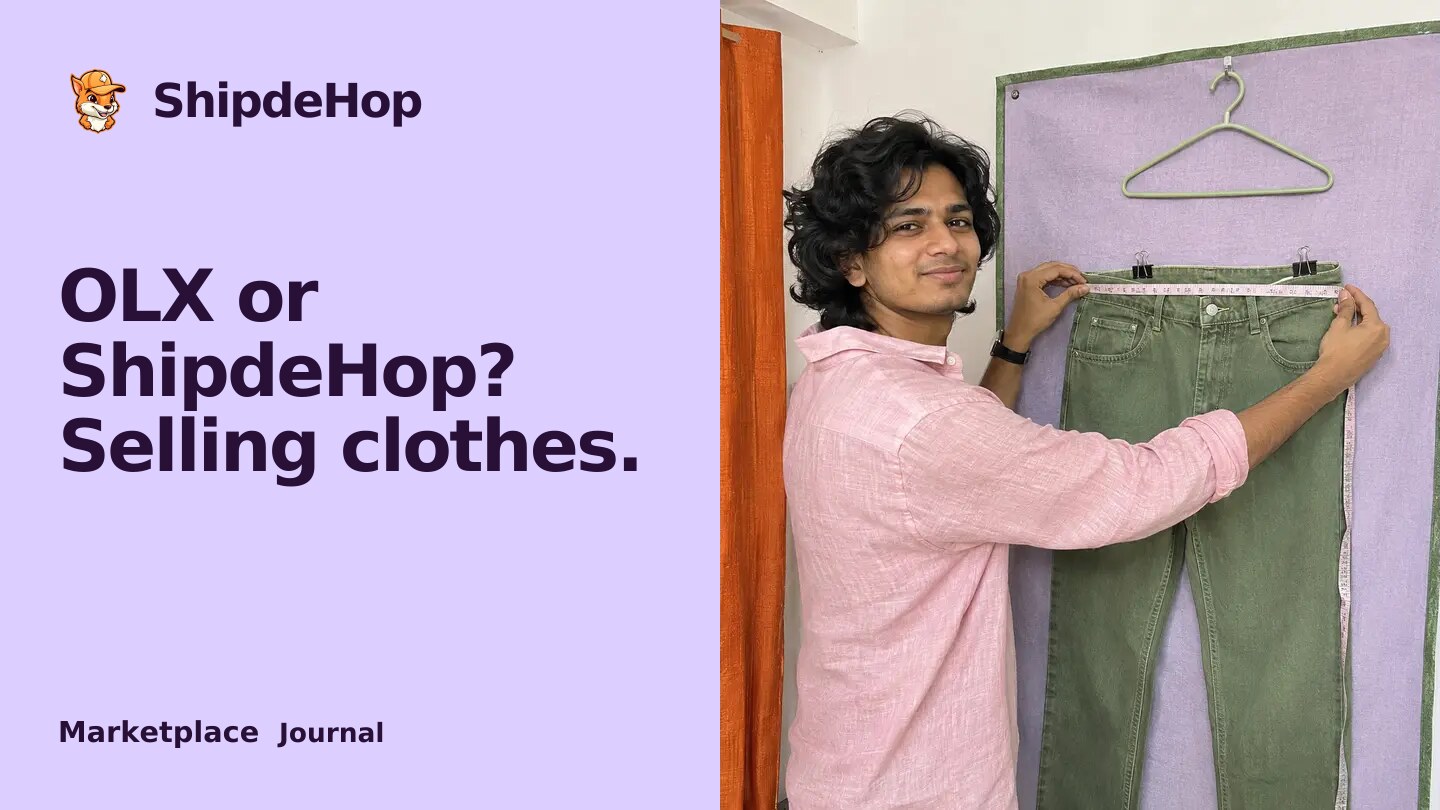
For trousers or jeans, that might include the waistband measured flat, rise and leg length. For a shirt or kurta, it might include the chest width measured flat, shoulder width and overall length. Explain how you measured, including whether a number is a flat width rather than a circumference.
Do not silently double a measurement, stretch elastic to its limit or round the result to the size you wish the garment were. If you are unsure of a measurement, say so and let the buyer ask for a better check. Measurement advice here is a listing method, not a promise of fit.
Show the front, back, label and important details in ordinary light. If the piece has been shortened, taken in or otherwise altered, mention that beside the measurements. A buyer should not have to discover the alteration after arranging collection.
- State the label size and any known alteration separately.
- Give the measurements relevant to that garment’s cut.
- Explain flat width, length and elastic measurements clearly.
- Photograph the actual piece rather than a catalogue model.
- Invite fit questions before agreeing the handoff.
Make condition evidence more useful than the word excellent
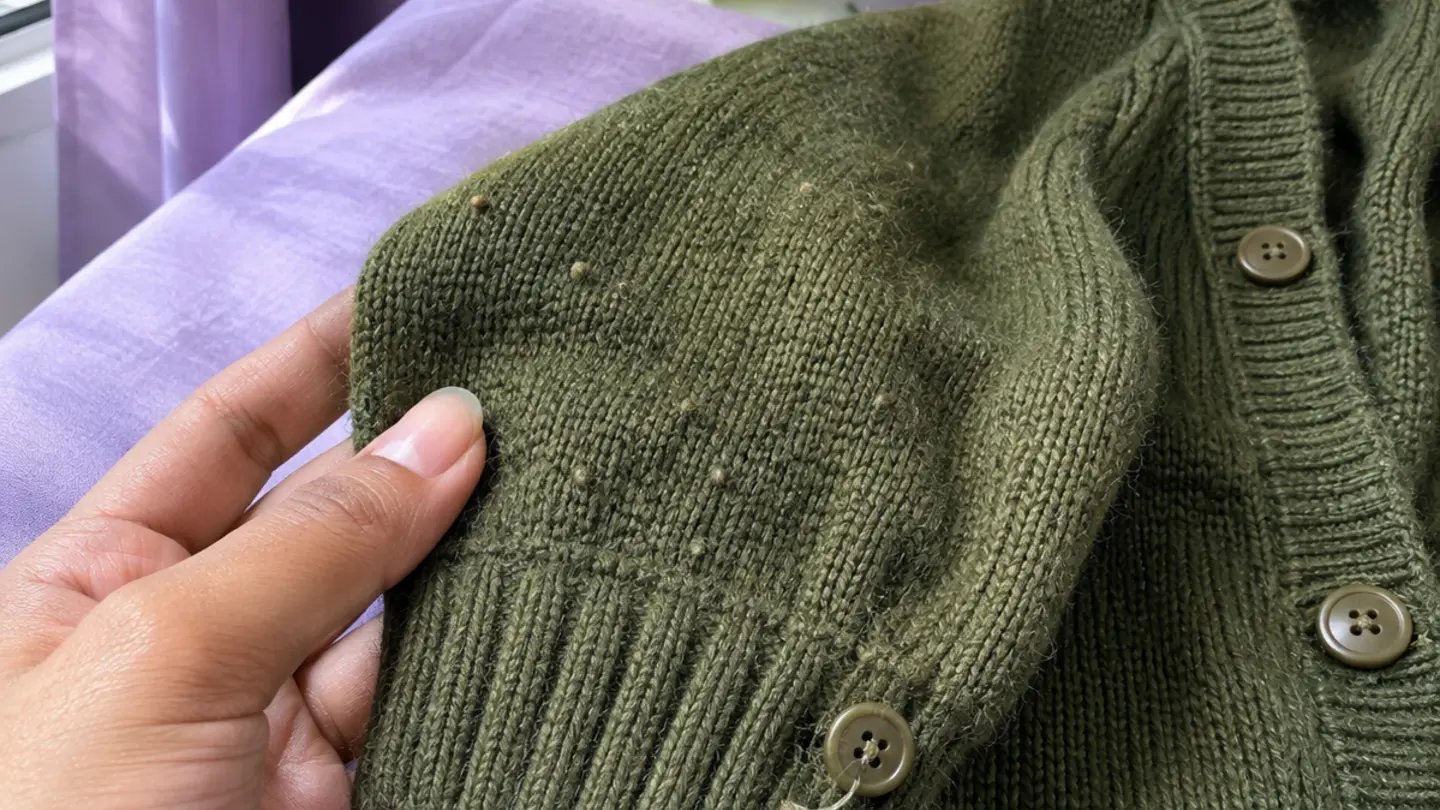
Lay the garment out or hang it so the buyer can see its real shape. Photograph the parts that carry wear: cuffs, collar, underarm area, hems, fastenings and any printed or embellished sections. Choose the details relevant to the piece rather than taking five identical front pictures.
Describe stains, pilling, fading, loose threads, missing buttons or damage honestly. Clean appearance in one photograph does not establish the absence of odour or every defect. Disclose what you know, and avoid claims you cannot support.
Do not edit a fault out of the photograph. A small mark that somebody willingly accepts is different from a mark they only see after paying. The purpose of a listing is to let them choose, not to win the first click at any cost.
Use the current-photo checklist as a starting point, then adapt it to fabric and fit. Brand tags and a convincing story do not prove authenticity. Do not claim that a platform identity badge authenticates a designer garment.
Reference ShipdeHop safety: identity and item inspection boundaries
Choose individual pieces or a bundle before setting the price
A bundle is useful only when it is clear what is included. Five shirts are not one condition report. State the size, condition and relevant differences for each piece, and say whether the buyer can choose individual items.
Individual listings may make more sense when the pieces differ substantially in fit or condition, or when one needs a detailed explanation. A bundle may be simpler when the garments genuinely work as a set and the buyer understands every included piece. Neither choice guarantees demand.
Use a numbered photograph or a plain item list in the conversation so both sides agree what changes hands. Avoid adding an extra worn piece at the last moment and calling it a bonus if the buyer has not accepted it.
Set your own minimum acceptable outcome before negotiating. The original purchase price can explain context if accurate, but it does not establish today’s value. Do not manufacture a discount percentage or a resale range from unrelated listings.
| Your situation | Consider | Clarify before agreeing |
|---|---|---|
| Different sizes or noticeable condition differences | Separate listings or a carefully itemised bundle | Measurements and faults for every included piece |
| Several similar pieces a buyer wants together | A clear bundle | Exact count, total price and whether selection is allowed |
| One piece needs authenticity or repair expertise | A separate decision with appropriate checking | What evidence you have and what you cannot establish |
| Moving out before a fixed date | A deadline-based plan with a fallback | Latest collection time and what happens if no sale completes |
Compare what you keep, not just what somebody offers
Write down the agreed sale amount, then subtract costs you personally agree to pay. Those may include preparation, packing, seller-funded delivery, travel to a meeting or an optional paid listing choice. Use actual amounts and current terms, not a universal platform-fee assumption.
Check OLX’s current listing limits and any paid choices shown for your account and category before posting. Do not assume every ad, promotion or transaction has the same cost because an old comparison article said free.
ShipdeHop takes zero commission, now and always. That does not make transport or packing free. If a willing traveller is involved, decide who pays the agreed contribution and any other collection costs before accepting an offer.
A buyer also looks at their full purchase cost, including any collection travel. If needed, point them to the complete purchase calculator using their own figures. It is not a forecast of your seller payout, a valuation of the garment or a promise of savings.
Your practical ledger is simple: agreed cash received minus seller-paid expenses. If the result is not worth the preparation and handoff you must do, reconsider the price, bundle or selling plan. You do not need an invented demand statistic to make that decision.
Reference ShipdeHop Marketplace: collection planning, commission and app availability
Agree inspection, payment and collection as separate steps
For a local sale, agree a suitable meeting and a reasonable opportunity to check the garment before completing the exchange. Keep the exact piece or bundle, accepted faults, total amount and collection window in the conversation.
If someone else collects, agree who approves condition. A traveller is not automatically a clothing authenticator, a fit consultant or the person who can authorise a substitute. Do not dispatch a different colour, size or garment without the buyer accepting the change.
OLX recommends inspection and keeping conversations in its chat. Separately, Google Pay’s official guidance says you do not need a UPI PIN to receive money. Keep your PIN and login OTP private, and do not follow an unfamiliar payment request simply because someone calls it a way to pay you.
Verify the payment status in your own bank or payment app rather than relying on a screenshot sent by the other person. If the status is uncertain, stop and check through official support. Do not hand over a garment to resolve pressure or confusion.
Read the safety guidance for the ShipdeHop flow. Identity verification helps establish identity, not garment authenticity, condition, behaviour or a completed payment. A website plan is not escrow or an automatic returns arrangement. ShipdeHop’s published availability page says production payments are disabled.
Reference OLX India Help Center: direct contact, inspection and buying process · Google Pay official guidance on UPI PINs, OTPs and payment safety · ShipdeHop safety: identity and item inspection boundaries · ShipdeHop product availability and current payment limitations
Send a garment brief, then choose the workable route
Try this message: I am selling [exact item or numbered bundle]. The label size is [size], the actual measurements are [measurements and method], and known alterations or faults are [details]. These photographs show the pieces included. The agreed amount is [amount], with [person] paying any agreed packing or transport costs.
Then add: Condition will be approved by [person] before [agreed step]. Collection is at [appropriate location and window]. If the garment differs from the description or the collector cannot attend, we will pause and agree the next step. Please confirm the exact item and arrangement before we proceed.
Use OLX when its current fashion listing and contact flow suits the sale you can arrange. Explore a ShipdeHop Marketplace plan when its current app options and collection choices fit your situation. Do not mistake the presence of a planning page for a ready buyer.
As checked on 4 November 2026, the website lists iPhone availability and Android as coming soon. Browser drafts stay local and do not reserve a purchase or collector. Use the explicit-consent signup if you want launch updates.
My test is straightforward: can the buyer understand the garment without borrowing your optimism? If the answer is yes, and the inspection, payment and collection plan works, you have done something more useful than picking a familiar logo.
Reference ShipdeHop Marketplace: collection planning, commission and app availability · ShipdeHop product availability and current payment limitations
Use the savings and contribution calculators with your own costs.
Questions, answered
Is OLX or ShipdeHop better for selling old clothes in India?
Check the exact garment, the available app options and the handoff you can arrange. OLX has published fashion listings and direct contact guidance. ShipdeHop describes a pre-loved marketplace with collection planning. Neither establishes a guaranteed buyer, fit, authenticity or sale deadline.
What measurements should a pre-loved clothing listing include?
Include the label size, relevant actual measurements and the method used. For example, distinguish a flat chest or waistband width from a circumference. Mention alterations and avoid stretching or rounding measurements to make the piece sound like a different size.
Should I sell clothes as a bundle or individual pieces?
Use a bundle only when every included piece is clearly described and the buyer wants that set. Separate listings can make differences in size, condition or evidence easier to explain. Neither approach guarantees a faster sale or a higher price.
Does ShipdeHop’s zero commission mean I keep the whole asking price?
It means ShipdeHop takes zero commission, now and always. Your final amount can still differ because of negotiation and seller-funded packing, travel or other agreed expenses. Record the actual sale amount and the costs you personally pay.
Do I need to enter a UPI PIN to receive money for clothes?
Google Pay’s official guidance says a UPI PIN is not needed to receive money. Keep PINs and login OTPs private. Verify receipt in your own bank or payment app and use official support if something is uncertain rather than trusting a buyer’s screenshot.
Sources and useful references
External source pages checked on 4 November 2026. The worked amounts are inputs for the decisions explained above.
- OLX official fashion listing category and location navigationChecked 4 November 2026
- OLX India Help Center: direct contact, inspection and buying processChecked 4 November 2026
- ShipdeHop Marketplace: collection planning, commission and app availabilityChecked 4 November 2026
- ShipdeHop safety: identity and item inspection boundariesChecked 4 November 2026
- Google Pay official guidance on UPI PINs, OTPs and payment safetyChecked 4 November 2026
- ShipdeHop product availability and current payment limitationsChecked 4 November 2026

I’m building ShipdeHop around useful connections between people, journeys and pre-loved things. Zero commission. Now and always.
Why I’m building ShipdeHop →